
The paradox nobody talks about
Your partner says they want to try a lemon vibrator with you. But their body language says something else. They're curious, sure. But they're also nervous. Anxious about whether they'll "do it right," whether it'll change what sex means between you, whether they'll somehow lose their place in the equation.
Here's the thing: that nervousness is not a problem to solve quickly. It's information. And if you move too fast, you'll turn curiosity into resentment.
What the nervousness actually signals
When a partner feels nervous about introducing a lemon vibrator into shared sex, they're usually running one of three storylines in their head.
First: "Am I not enough?" If they've spent years being the source of your pleasure, a vibrator can feel like a referendum on their performance. It's not rational. But it's real. Many partners interpret a vibrator as criticism.
Second: "Will this replace me?" There's a specific fear that once you experience a lemon vibrator's suction sensation, you won't want their touch anymore. That somehow the device will become your preferred partner.
Third: "I don't know what my role is anymore." If sex has always followed a familiar script, introducing a device disrupts the choreography. They don't know where to stand, what to do with their hands, when to touch you. The uncertainty reads as anxiety.
None of these fears dissolve through reassurance alone. They dissolve through experience and rebuilt trust.
Start with education, not invitation
Don't jump straight to "let's use it together tonight." That's the worst possible entry point because it collapses three conversations into one moment of high stakes.
Instead, separate them.
First conversation: facts. Show your partner a lemon vibrator (or a photo if physical proximity feels too vulnerable right now). Explain what it does. Explain how it's different from a traditional vibrator. The suction mechanism doesn't replace what hands or bodies do. It adds a sensation that nerves respond to differently. That's it. No performance expectations. Just: this is a tool. Here's how it works technically.
Second conversation (hours or days later): your experience. "I tried the lemon vibrator alone and here's what surprised me..." Focus on sensation, not comparison. Don't say "it was better than what we do." Say "it creates a different kind of sensation. I could feel it working differently than vibration." Keep it curious, not competitive.
Third conversation: their role. This is where you actually invite them in, but you do it with a specific job in mind.
Give your partner a real job (not a supporting role)
Nervous partners feel better when they have agency. The worst thing you can do is hand them a lemon vibrator and say "just hold it." That makes them feel like a replacement for your hand. It's disempowering.
Instead, give them a genuine role:
They control the settings. While you're using the lemon vibrator, they decide whether you go to pattern one, two, three. They watch your face and reactions and make the call. Suddenly they're not sidelined. They're the expert observer. They're leading the experience.
They manage touch elsewhere. Maybe they use the lemon vibrator while you focus on their pleasure. Or maybe you use it while they touch your body where the vibrator isn't. They're not replaced. They're collaborating in a specific way.
They do the exploration together. You both try it on them first, on less sensitive areas. Forearm, inside of wrist. They feel the sensation before there's any performance pressure. You're scientists together, not director and actor.
The conversation you actually need to have
Before anything physical, say this (or something like it, in your own language):
"I want to try this with you because I want more of you in my pleasure, not less. When I experience something new physically, I want you to be there. I want you to see it. I want you to be part of it. This isn't about something being wrong with what we do. It's about making room for something we haven't done yet. And I need you to know that you matter in this. I'm not trying to do this alone."
Then: listen to what they actually say back. Not what they say they should say. What they genuinely worry about. And address that specific worry, not the generic version.
If they say "I don't want to mess it up," that's different from "I'm worried you won't want me after." Those need different conversations.
What actually happens when you move slowly
Most partners' nervousness dissolves once they see that a lemon vibrator doesn't replace them. It just adds texture. They realize their hands matter. Their mouth matters. Their attention matters. The device is one tool among many, not a replacement for intimacy.
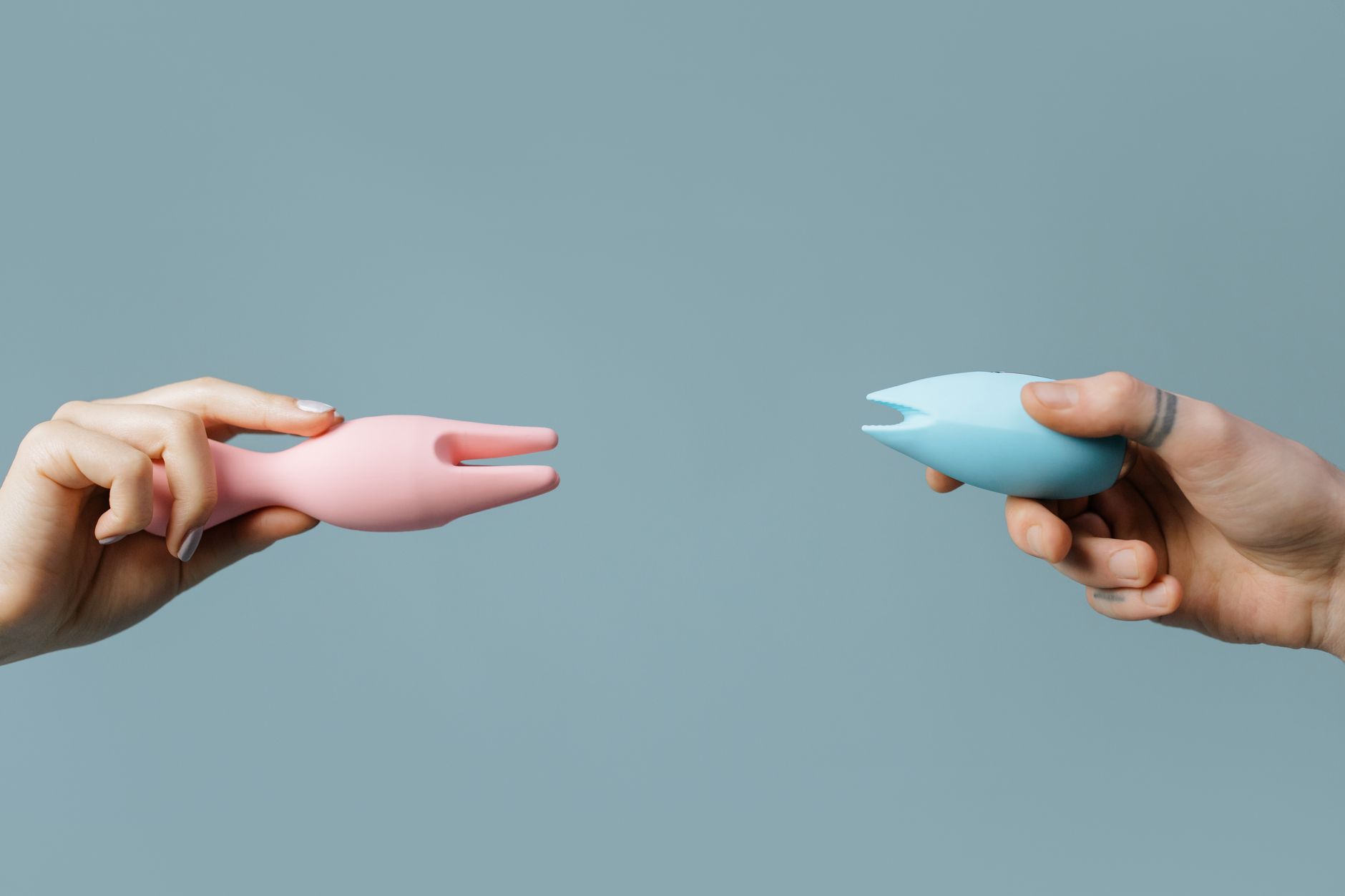
Photo by cottonbro studio on Pexels
What often happens is that partners become less anxious and more curious. They ask questions. "Can I try this pattern?" "How does this feel different?" "Should we explore this other setting?" The nervous energy transforms into collaborative energy.
And honestly? Many nervous partners end up wanting their own lemon vibrator. Not because they want to use it alone. But because they want to know what you're experiencing. They want to feel it too, in their own way.
The timeline that actually works
Don't rush this.
Week one: education and your solo experience.
Week two: your partner's first exposure (you using it while they touch you elsewhere).
Week three or beyond: them actively participating or using it themselves.
There's no prize for speed. There's everything to lose from it. If you move at your nervous partner's actual pace, not the pace you think they should be comfortable with, the experience becomes something you both want to repeat.
If you rush, you create a memory of pressure. And that memory lingers.
When nervousness turns into resistance
There's a difference between "I'm nervous but willing" and "I don't actually want this." Listen for it.
Nervous partners show up. They ask questions. They try things, even hesitantly. Resistant partners withdraw. They avoid conversations. They change the subject. They give you reasons why tonight isn't the night, again.
If your partner is genuinely resistant, not nervous, the lemon vibrator isn't the real conversation. The real conversation is about why they feel threatened, unseen, or unheard in the relationship. That's bigger than a toy. That might need a therapist. And that's okay. That's actually when couples therapy is most useful.
But if they're nervous? That's workable. Nervousness means they care enough to feel vulnerable. Nervousness means there's something to build on.
The part about your own pleasure
Here's something I see happen a lot: the person who wants to use a lemon vibrator gets so focused on managing their partner's emotions that they stop thinking about their own pleasure. That's a trap.
Your pleasure matters. Your curiosity about new sensations matters. Your desire to experience something different matters. Don't shrink yourself to make your partner comfortable.
What you're looking for is the middle ground. You honor your partner's nervousness without abandoning your own needs. You move slowly without stopping. You're patient without being self-sacrificing.
That's the balance that actually works in long-term partnerships.
FAQ
Will using a lemon vibrator together change our sex life?
Yes, and that's the point. It'll probably become richer. Your partner will understand you differently. You'll understand your own body differently. And if you move slowly and communicate well, you'll feel more connected, not less. Most couples who successfully introduce a device report that it deepened their intimacy because they had to talk about pleasure directly. That conversation alone changes things for the better.
What if my partner still refuses after we talk about it?
Then you have a choice to make. You can use a lemon vibrator alone, and you can decide whether that's enough. Or you can decide you need a partner who's willing to grow with you sexually. Both are legitimate. But trying to convince someone who has genuinely said no is relationship damage. Respect the boundary.
How do I know if my partner's nervousness is actually just not being ready?
Ask directly. "Are you nervous but willing, or are you not interested right now?" Listen to the answer. Nervous people will usually say "I'm nervous but I want to try." People who aren't ready will say "I need more time" or "I don't think I want this." The language is different.
Can we use a lemon vibrator if my partner has never used any sex toy before?
Absolutely. In fact, how lemon vibrators compare to traditional vibrators for everyday use might be helpful context. A lemon vibrator is often gentler and more targeted than a traditional wand. Some partners find that less intimidating because it feels less clinical.
What if my partner wants to use it but I'm the nervous one?
Then the dynamic flips but the principle stays the same. Let your partner set the pace. Don't perform eagerness you don't feel. And notice what's actually driving your nervousness. Is it feeling exposed? Worried about your body? Unsure about pleasure? Each of those needs a different conversation.
Does using a lemon vibrator together actually improve desire mismatches?
Sometimes. If the mismatch is about one partner wanting more sensation, or more exploration, or more novelty, then yes. How lemon vibrators help with desire mismatches between partners goes deeper into that. But if the mismatch is really about one partner not wanting sex at all, a device won't fix that. You need the deeper conversation first.
The real work
Using a lemon vibrator with a nervous partner isn't actually about the vibrator. It's about building trust in the face of vulnerability. It's about showing your partner that introducing something new doesn't mean leaving them behind. It's about slowing down enough to let their nervous system catch up to their curiosity.
Do that, and the physical experience becomes so much richer. Your partner goes from nervous to genuinely engaged. And you both realize that the willingness to be awkward together, to move slowly, to communicate directly about pleasure. That's what actually makes sex better over time.
The lemon vibrator is just the vehicle.
If you're still figuring out how to talk about pleasure in your relationship, reach out. That conversation deserves space and attention.