
Let's talk about what slow arousal actually means
Honestly, here's the thing: if you're someone whose arousal takes 15, 20, or even 30 minutes to build, you're not broken. You're normal. Most bodies don't flip a switch from zero to sixty in seconds, no matter what mainstream culture suggests. The myth of instant desire is exactly that. A myth.
What's actually happening when arousal takes longer is that your nervous system is doing its job. Blood is flowing to your genitals. Sensation is heightening. Your brain is shifting into a different gear. This takes time. And that's where lemon vibrators change everything.
Why arousal speed varies so much from person to person
Three major factors control how quickly your body responds to stimulation:
Hormonal state. If your estrogen is lower (whether from age, cycle timing, or medication), arousal often takes longer. This isn't permanent, but it's real. Accepting it removes the shame around it.
Stress and nervous system activation. If you're in a sympathetic state (fight-or-flight), your body won't prioritize blood flow to your genitals. You're protecting yourself. Your nervous system is doing exactly what it thinks it should do. A partner who gets this won't rush you.
Medication effects. SSRIs, blood pressure meds, and hormonal birth control all affect arousal speed. This is so common that if you've noticed a shift after starting a new medication, your doctor has heard this before. You're not imagining it.
None of these things means your capacity for pleasure is smaller. It means the entry point takes longer.
How lemon clitoral vibrators work with slow arousal
A lemon vibrator (also called a clitoral suction vibrator) works differently than a traditional vibrator. Instead of buzzing against tissue, it creates gentle suction and releases, which stimulates the clitoral nerve network in a way that feels less intense at the start but builds more predictably.
Here's why this matters for slow arousal:
The stimulation is gradual and cumulative. You're not getting hit with full intensity from the first second. The sensation builds as your blood flow increases. This matches your body's actual arousal curve instead of fighting against it.
Lower initial intensity means you can start sooner. With a traditional vibrator, you might need to wait until you're already quite aroused before the sensation feels good. With a lemon clitoral vibrator, you can start the moment you want touch, at a low setting, and let it build from there.
The sensation pattern is complex. The pulsing creates a rhythm your nervous system finds grounding. If you're someone whose mind wanders or who needs to stay present, this rhythmic engagement helps.
I've worked with countless clients who thought they had low desire until they tried a tool that actually matched their arousal timeline. Turns out they didn't have low desire. They had mismatch between their body's pace and the tool they were using.
The warm-up phase actually matters
This is going to sound simple, but it's radical: treat your warm-up time as the main event, not the foreplay.
When I work with couples navigating slow arousal, the first thing I suggest is reframing. Instead of "we need to get warmed up so we can have real sex," it becomes "this time together is the entire experience." That shift removes the pressure that was probably slowing things down in the first place.
If you're using a lemon vibrator during this warm-up phase, here's what actually works:
Start at a low setting (level 1 or 2) and spend time just getting familiar with the sensation. You're not chasing orgasm. You're noticing what feels good. This is different from rushing toward a goal. Many people find their arousal deepens faster when the goal is "feel good right now" instead of "reach orgasm."
Give yourself 20-30 minutes without time pressure. Your body needs this duration to fully shift into arousal. It's not laziness. It's physiology.
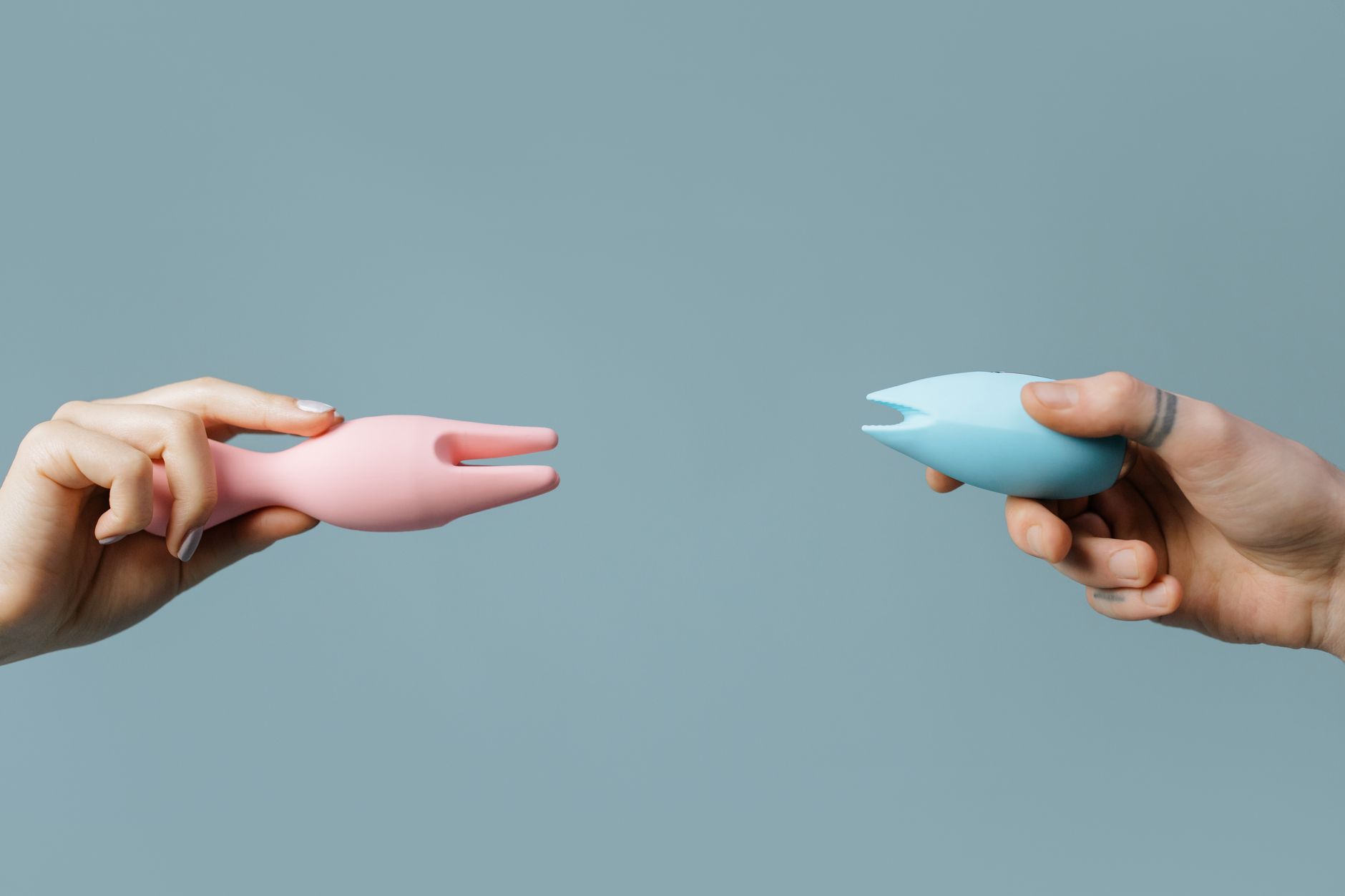
Photo by cottonbro studio on Pexels
When arousal takes longer with a partner
This is where the real work happens. If you're with a partner, here's what's actually going on: your arousal pace is different from theirs (or at least, it feels like it is). This doesn't mean something is wrong. It means you have to talk.
The conversation shouldn't be "why do you take so long." It should be "I want to understand your body better. What would make this time feel good for you?"
Maybe your partner sits with you while you explore with your lemon vibrator. Maybe they touch you in other places while the vibrator does its work. Maybe they simply stay present without doing anything, which for many people is the deepest intimacy available.
The mistake couples make is turning slow arousal into a problem to solve instead of a rhythm to honor. When you honor it, everything shifts.
For partners who feel self-conscious about their own arousal speed, reading How to Use Lemon Vibrators With a Partner Who Feels Self-Conscious can help build confidence and communication.
Tracking what actually works for your body
Your arousal timeline isn't fixed. It changes with stress, sleep, cycle timing, and relationship dynamics. The best way to figure out what works is to pay attention.
After a few sessions with your lemon vibrator, notice:
What time of day does arousal come easiest? (Many people find morning or early evening beats late night.)
What's your actual baseline? (If you think you need 5 minutes but actually need 20, accepting that removes resentment from the equation.)
Does slower arousal feel more intense when you finally get there? (Spoiler: it often does.)
How much of the "slowness" is physical versus mental? (Stress, distraction, and worry probably account for half of it.)
This isn't about optimizing yourself. It's about getting to know yourself well enough that you stop fighting your own body.
The pleasure payoff of longer arousal
Here's something no one tells you: people with slower arousal often experience deeper, more full-body pleasure than people whose arousal ignites instantly. This isn't compensation. It's just what happens when you give your nervous system time to fully activate.
Your clitoris has about 8,000 nerve endings. When blood flow builds slowly, more of those nerves get engaged. Your pelvic floor has time to engage. Your whole body gets the signal that it's safe to be aroused. The sensation isn't concentrated in one spot. It becomes full and expansive.
Lemon clitoral vibrators amplify this because they're designed to work with this pace, not against it. You get more nuance. More control. More actual pleasure.
If you're using one for the first time with slow arousal, expect this to feel different than you thought it would. Not better or worse. Different. Give yourself 3-4 sessions before deciding what you think.
FAQ: Your questions about slow arousal and lemon vibrators
Is slow arousal a sign of low desire?
No. Low desire means not wanting sex. Slow arousal means wanting it but needing time. These are completely different. Many people with slow arousal have high desire. They just need permission to take their time.
Can lemon vibrators actually make arousal happen faster?
Sometimes. Because they're less intense at lower settings, some people find they can engage with them sooner and relax into the sensation more quickly. But the real benefit isn't speed. It's matching your body's actual timeline so you stop fighting yourself. Relaxation makes arousal faster more than any tool can.
Should I use a lemon vibrator alone or with a partner?
Both work, and they're different. Alone, you have complete control and zero pressure. With a partner, you get intimacy and presence. If slow arousal happens mostly with a partner, using a lemon vibrator together normalizes taking time. If it happens when you're alone, solo exploration helps you understand your body without any external pressure.
What if my partner has fast arousal and I have slow?
This is so common it's almost standard. The fix is separating "his time" from "her time." Maybe your partner gets aroused quickly, and you both accept that. So during couple time, they're the one doing more of the initiating work (which is fine) while you take the time you need. How Lemon Vibrators Help With Desire Mismatches Between Partners goes deeper into managing this dynamic.
Does arousal speed change with age?
Yes, especially for people with estrogen-dependent arousal. As hormones shift, arousal often takes longer. This is real, predictable, and totally workable once you accept it. Tools like lemon vibrators are designed for this exact phase of life.
How do I stop feeling bad about needing time?
First, accept that your timeline isn't a flaw. It's data about your body. Second, stop measuring yourself against anyone else's experience. Their arousal curve is irrelevant to yours. Third, reframe warm-up time as pleasure time, not prep work. The moment you stop rushing it, it usually feels better.
The real truth about slow arousal
Your body isn't broken because arousal takes time. Your body is honest. It's telling you exactly what it needs: presence, patience, and the right kind of touch. Lemon vibrators work with this honesty instead of against it. They're designed for bodies that need time. That's not a compromise. That's exactly the point.
If you're curious about how lemon vibrators compare to other options for your body type, Why Lemon Clitoral Vibrators Feel Different After Stopping Birth Control explores how your arousal timeline might shift as your hormones do.
Your pleasure matters. The time it takes doesn't diminish that. The right tools, the right conversations, and the right patience make all the difference.