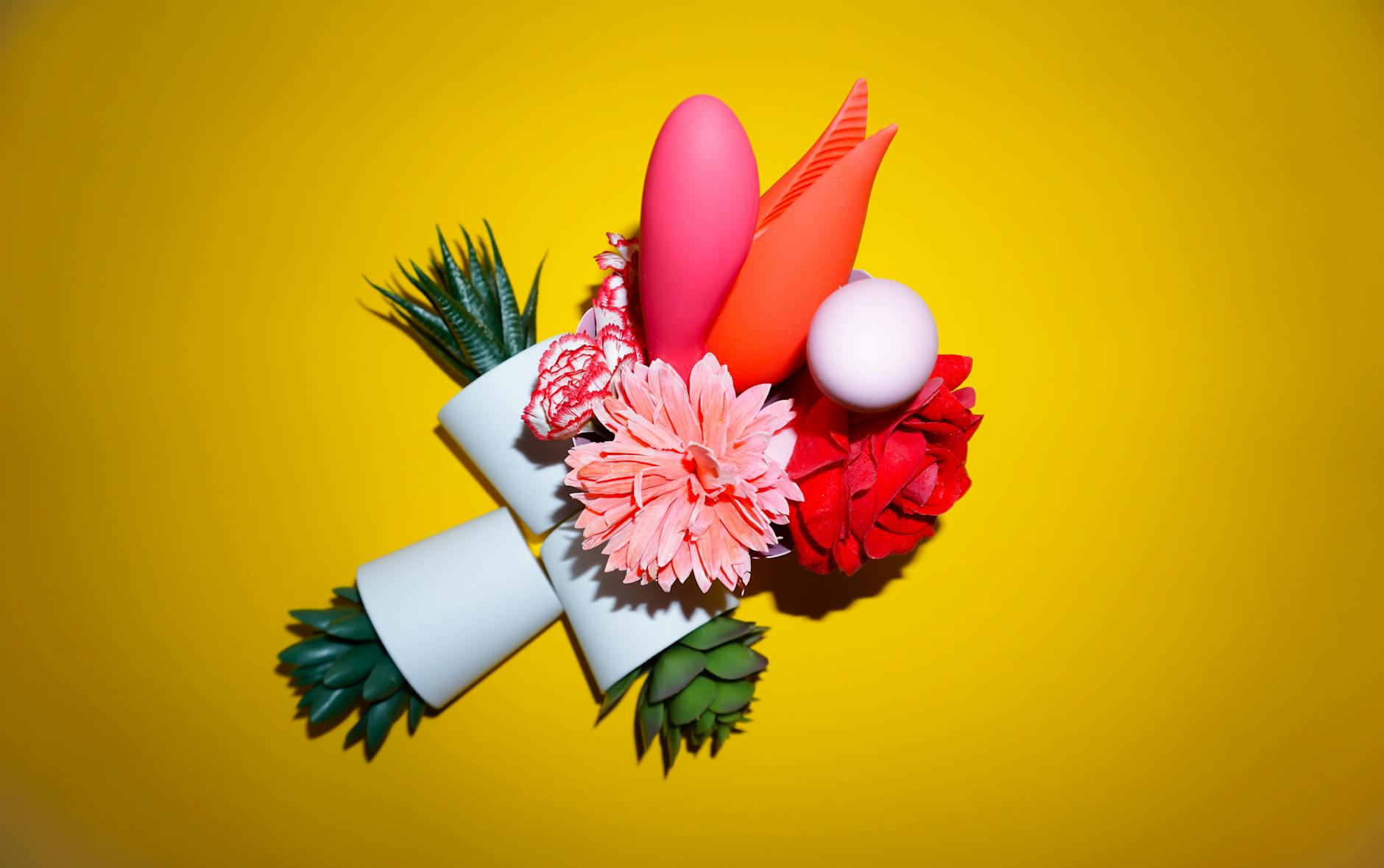
Why Lemon Vibrators Feel Different As You Age
Let's be real: your body at 20 is not your body at 40. That's not sad. It's just math. And when it comes to pleasure, understanding what changes and why means you can actually get better at it instead of assuming something's broken.
I've worked with hundreds of people navigating this exact question in therapy. The frustration isn't usually about age itself. It's about expecting your body to work the same way it always did and then feeling blindsided when it doesn't. So let's talk about what actually happens, why it happens, and how tools like lemon vibrators can be even more effective once you understand the shifts.
How sensitivity changes over time
Your vulva doesn't lose sensation as you age. What shifts is the type of sensation that creates arousal and orgasm. Younger bodies often respond quickly to direct, intense stimulation. Think high-speed, high-pressure vibrators that cut straight to it. That works because your tissues are thicker, your blood flow is reactive, and you might have lower awareness of what you actually want anyway.
As you move through your 30s and 40s, the clitoral tissues gradually shift. There's less elasticity in the skin. The tissue under the clitoral glans becomes slightly less cushioned. This is why many people find that the relentless jackhammer approach of traditional vibrators starts to feel less like pleasure and more like pressure. It's not that you've lost sensation. You've gained discernment.
Hormonal fluctuations also play a role. If you're cycling (pre-menopause), your sensitivity varies across your cycle. Days 7-14 tend to be more responsive. Days 19-21 might need more time and more lube. By your late 40s and 50s, as estrogen stabilizes at a lower baseline, tissues become thinner and drier. This is textbook, not pathology.
When you know this is happening, you can stop interpreting it as loss. It's actually an invitation to get more specific about what feels good.
Why arousal takes longer (and might be better)
Anyone who's been sexual for decades notices this: the hair-trigger arousal of youth fades. You don't go from neutral to peak in 90 seconds anymore. Instead, you need 10 to 20 minutes of sustained attention, often mental focus alongside physical touch.
There are a few reasons. Adrenaline response softens with age. The rush of novelty that might have been enough in your 20s isn't automatic anymore. Stress loads accumulate. If you're juggling work, family, relationships, and just existing, your nervous system is less bouncy. Life experience also changes what turns you on. Psychological arousal matters more. You're less aroused by pure fantasy and more aroused by real connection, genuine pleasure, or specific conditions you've learned about yourself.
Here's the good news: this slowness is a feature. It means you're less likely to rush into sex that doesn't actually serve you. Your body is protecting you by requiring more deliberation. And once arousal builds, it often sustains longer and feels deeper.
This is where lemon vibrators and clitoral suction tools shine. Unlike traditional vibrators, suction-based stimulation works with your body's natural arousal, rather than forcing it. It invites blood flow gradually. The sensation builds. You can start low and let it intensify as your body responds, which is exactly how older bodies often prefer to be touched.
Tissue changes and what feels good
If you've used high-intensity vibrators for years and suddenly they feel raw or uncomfortable, tissue thinning is probably the culprit. Thinner tissue is more sensitive to friction and less forgiving of harsh stimulation. It's not weakness. It's just how bodies age.
The shift often happens between 35-50, depending on genetics, hormones, and overall tissue health. And it matters because it directly affects which tools will feel amazing versus which will feel harsh.
Lemon vibrators work particularly well here because suction stimulates without friction. If you're using something like the Lem, you get direct clitoral stimulation without the wear-and-tear sensation of a vibrator trembling against sensitive skin. The suction approach also distributes pressure over a wider area, which many people find less intense and more pleasurable as they age.
For comparison, if you're reading our guide on how to use clitoral vibrators if you have sensitive skin, you'll see similar principles apply. The key is matching stimulation intensity to tissue sensitivity, not forcing the same approach that worked at 25.
The role of lubrication and recovery
Your body produces less natural lubrication as you age. This is one of the most misunderstood aspects of aging and sex. People assume dryness means something's wrong. Actually, it's just a change. And it's remarkably easy to address.
Water-based lubricant does more than add slip. It changes the entire sensation profile. It makes vibration feel smoother. It protects tissue from friction. It also means you can extend pleasure longer without discomfort. Keep a bottle beside your bed. Use it generously. This is not negotiable.
Recovery time also shifts. In your 20s, you might go from one orgasm to another quickly, or have multiple intense orgasms in sequence. By your 40s, you might need a few minutes between peaks. By your 50s and beyond, you might have a longer resolution phase. Again, this is normal. It's also why extending the journey itself (rather than chasing quick peaks) often feels more satisfying.
Psychological arousal gets more important
This is the shift most people don't anticipate, and it's often the most meaningful.
When you're younger, arousal can be pretty automatic. A body touching you, a thought, visual stimuli, novelty. The system fires up quickly. As you age, mental factors become the primary switch. You need to actually want to be there. You need the right frame of mind. You might need to feel genuinely desired, or to feel desire yourself. Fantasy becomes more important, not less. Privacy and lack of interruption matters more. Your own invitation to yourself matters.
This is why so many people find that solo pleasure shifts with age. You're not trying to match someone else's timing. You're not managing their expectations. You can create the exact conditions that make your nervous system settle into arousal. You can take your time. You can think about what you actually want. And honestly, that's often when the best experiences happen.
When you're working with a partner, this shift can feel like loss if you're not talking about it. It can also become an opportunity to rebuild intimacy around what actually works now, rather than what worked before.
Age and orgasm quality
Here's something most articles skip: orgasms often improve with age.
Younger bodies sometimes have quick, surface-level orgasms. Older bodies often have orgasms that feel deeper, more resonant, sometimes full-body. This is partly because you know your own body better. You're less distracted. You know how to breathe. You understand what builds sensation. Neurologically, research shows that older adults often experience more complex, sustained orgasmic response. The peak might be slightly different, but the experience is often richer.
This is especially true with the right tools. Lemon suction vibrators work well across ages, but people over 40 often report that the focused, buildable stimulation of air-pulse technology creates orgasms that feel qualitatively different from what traditional vibrators produce. More wave-like. Less explosive but more sustained. Easier to have multiples. This isn't just subjective. It's reflecting how tissue, blood flow, and neural sensitivity interact differently as you age.
When to reach out for support
If penetration feels painful, don't assume it's just age. Thin tissue can be supplemented with topical estrogen creams, which have minimal systemic absorption and work quickly. If orgasm has completely disappeared, that's worth exploring with a provider. Loss of desire warrants a conversation too. These are addressable things, not inevitable consequences of aging.
But if you're simply noticing that your body responds differently, that it takes longer, that it needs different approaches, that what feels good has shifted? That's not a problem. That's information. That's your body telling you exactly what it needs right now.
The invitation
Aging changes pleasure. It doesn't end it. And in my experience, that's the distinction most people get wrong. You're not losing capacity. You're gaining specificity. Your body knows more. It wants more presence, more intention, more truth.
That's actually the setup for some of the most satisfying experiences of your life. If you're new to lemon vibrators and want to know how to approach them, that's your starting point. If you're already familiar and want to deepen your understanding, keep exploring. Your pleasure deserves that investment.
Common questions about aging and lemon vibrators
Why do I need more stimulation now than I did years ago?
You might not need more stimulation. You might need different stimulation. Tissue sensitivity changes with age. The type of touch that created quick arousal at 25 might feel harsh or off-target at 45. Suction-based lemon vibrators often work better because they invite arousal rather than force it, and they distribute sensation more broadly than traditional vibrators. It's not that your body is broken. It's that your body's preferences are evolving.
Can lemon vibrators help if I'm going through hormonal changes?
Absolutely. Air-pulse technology in lemon clitoral vibrators doesn't depend on tissue thickness or lubrication the way traditional vibrators do. You can use them across different hormonal phases. Water-based lubricant helps, but it's not as critical. Many people find they prefer suction-based stimulation during phases when tissue is thinner or more sensitive.
Is it normal for orgasms to feel different as I get older?
Completely normal. Orgasms often shift from quick peaks to longer, wave-like sensations. From localised to full-body. From explosive to sustained. This isn't loss of capacity. It's a change in how your nervous system processes pleasure. With the right tools and the right mindset, older orgasms are often richer and more satisfying.
How much does natural lubrication decrease with age?
It varies widely. Some people notice minimal change. Others notice significant dryness, especially around menopause. The key is not to see this as inevitable loss but as a signal to add external lubrication. Water-based lube is your friend. It transforms sensation and protects tissue. Keep it accessible.
Should I switch from traditional vibrators to lemon vibrators as I age?
Not necessarily. Some people use both. The question is: what feels good now? If traditional vibrators still work for you, great. If they've started to feel harsh or overstimulating, lemon suction vibrators offer a different sensation profile that many older bodies find more nuanced and more enjoyable. There's no one right tool. There's only the tool that works for your body right now.
Can I restore tissue thickness or increase natural lubrication?
Topical estrogen creams can help with tissue thickness and lubrication, and they have minimal systemic absorption. Systemic hormone therapy also affects tissue health. But the simplest, most immediate tool is water-based lubricant. It works immediately and transforms sensation. For other interventions, a conversation with a provider who specialises in sexual health is worth having.
Your body is still capable of profound pleasure. It's just asking for something different now. Listen to that. Adapt to it. And watch what becomes possible when you stop fighting how you're built and start working with it.
If you want to explore this further or have questions about your specific situation, reach out to us. We're here to help.