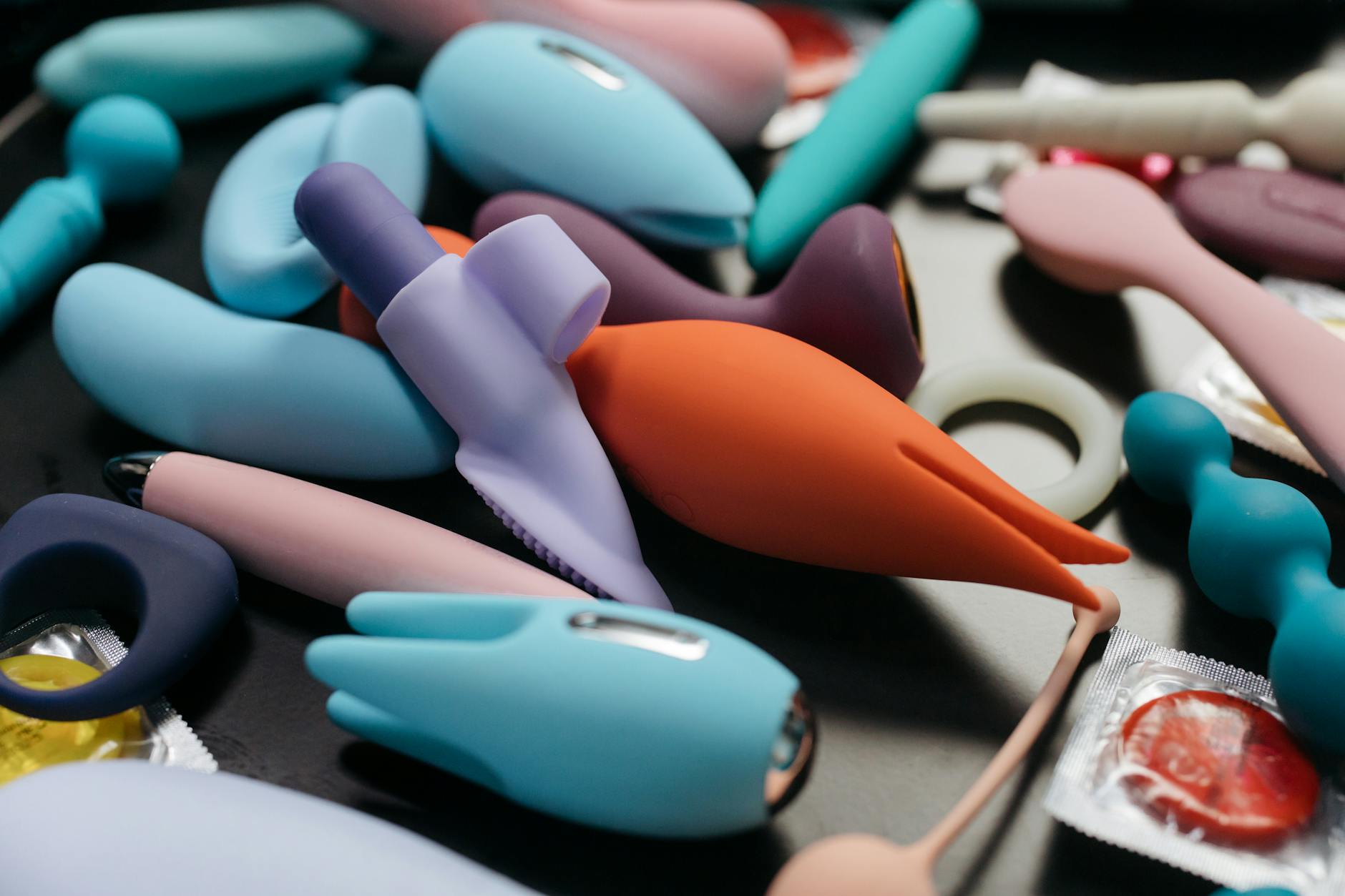
How to Use Lemon Vibrators When Your Partner Wants to Watch
Let's be honest: the first time someone watches you use a vibrator, it's awkward. You're hyper-aware of your breathing. Your legs feel too exposed. You're wondering if your face is making weird expressions. None of that is abnormal. And none of it means you shouldn't do it.
The thing about pleasure is that it gets better with practice. Not just the orgasm part. The whole experience. Including the part where another person is present for it.
Why watching feels different (and harder) than solo play
When you're alone with a lemon vibrator, your job is simple: find what feels good and chase that feeling. Your attention lives entirely in your body. When your partner is watching, your attention splits. Part of you is still chasing sensation. Part of you is aware of being looked at. Part of you might be worrying about whether they're enjoying this or judging you.
That cognitive load is real. It's not a personality flaw. It's just how attention works under observation.
But here's the paradox: once you've done it a few times, something shifts. The self-consciousness doesn't vanish. Instead, it becomes part of the experience. You stop fighting it and start using it. That vulnerability becomes a form of intimacy.
Start with the conversation, not the vibrator
Before you even touch a lemon vibrator in front of your partner, tell them three things:
What you need: "I need you to stay quiet while I'm getting started." Or "I'd like you to tell me what you see, but nothing about whether it's working for me." Or "I need to know you're not filming or taking photos." Specificity matters. Vague permission leads to awkward moments mid-experience.
What turns you on about it: "Knowing you want me turns me on more than the vibrator alone." Or "I'm nervous but I want to try this because I trust you." Or "I like feeling wanted." This isn't about performing. It's about context. Your partner needs to understand what this is for you, or they'll misread your silence as discomfort.
What's off limits: "I don't want commentary about my body." "I'm not okay with jokes mid-experience." "If I seem uncomfortable, ask me, don't assume." These aren't mood killers. They're permission structures. They actually make pleasure possible.
The logistics that make it easier
Three practical shifts that change everything:
Position matters more than you think. Lying on your back facing your partner is vulnerable in a way that can feel paralyzing the first time. Try sitting up, leaning back on pillows at a 45-degree angle. You can see your partner. They can see you. But you're not completely exposed. Later, as you get comfortable, you can shift positions. Right now, position is a tool for managing exposure.
Lighting is crucial. Harsh overhead light amplifies self-consciousness. A lamp across the room, or light from the hallway, or your phone's flashlight aimed at the ceiling. You want enough light that your partner can see you. Not enough that you feel like you're under interrogation.
Start with a lemon vibrator if you're new to toys with a partner. Air-suction toys like the Lemon Clitoral Vibrator are gentler than traditional vibrators, require less direct pressure, and the sensation is less predictable. That unpredictability is actually an advantage here. You can't autopilot through pleasure. You have to stay present. And paradoxically, that presence makes the whole experience feel more intimate to your partner too.
Building actual comfort (not just powering through)
Comfort isn't something you either have or don't have. It's something you build.
Session one: Turn on the vibrator alone, in front of your partner, for 30 seconds. That's it. Let them watch you explore sensation without pushing toward an orgasm. The goal is familiarization, not performance. Your nervous system gets to practice being watched while the stakes are low.
Session two: Same setup. This time, go longer. Maybe three minutes. Let arousal build a little. You don't have to orgasm. You're practicing the experience of pleasure while observed.
Session three: Go for pleasure. Not performance, pleasure. Use your lemon vibrator the way you would alone. Your partner's job is to be present and quiet unless you invite them into the experience ("Come closer" or "Tell me what you see").
This three-step progression sounds slow. It's not. Most couples move through it in a week or two. And the payoff is real: by session three, your nervous system has learned that being watched and feeling good aren't mutually exclusive.
When your partner wants to participate
Some people want to watch. Others want to be part of it. If your partner is asking to touch you while you're using the lemon vibrator, or to use it on you, that's a different conversation.
You get to set the rules here. Some people love the combination of a partner's touch and vibrator sensation. Others find it overwhelming. Your job is to try it once, pay attention to what actually feels good (not what you think should feel good), and tell your partner what works.
If you love it: "I want you to touch me while I use the vibrator." If it's too much: "I want you to watch, but I need to control the vibrator myself." If you want something in between: "I want you to use it on me, but I need to guide your hand." The specificity is what makes this work.
The self-consciousness that doesn't go away (and why that's okay)
Some people report that self-consciousness fades completely after a few times. Others find that it stays, but transforms. Instead of "Oh god, they can see everything," it becomes "They can see everything, and they still want to be here."
That second version of self-consciousness is actually intimate. It's what happens when vulnerability becomes a choice instead of something you're fighting against.
If the self-consciousness stays and bothers you, that's information. It might mean you need a longer warm-up time. It might mean you need less direct eye contact. It might mean this particular fantasy isn't for you right now, and that's fine too. Pleasure isn't about forcing yourself through discomfort. It's about figuring out what discomfort is actually just unfamiliarity, and what discomfort is a real boundary.
Managing the awkward moments when they happen
You might freeze mid-orgasm. Your partner might laugh at the wrong moment. The vibrator battery might die. Something might feel uncomfortable.
None of these moments are failures. They're just moments. The move is to pause, check in ("That felt weird, can we try something different?"), and keep going. Or to laugh together and start over. Or to stop entirely and try again next week.
Partners who are worth having sex with in front of are partners who can handle these moments as information, not as rejection. If your partner gets weird or distant when something doesn't go perfectly, that's a sign the intimacy work needs to happen before the vibrator comes out.
Why this matters beyond the immediate experience
When you use a lemon vibrator in front of your partner and survive it, something shifts in the relationship. You've shown vulnerability and been received. That's not a small thing. It's one of the building blocks of deep intimacy.
Most couples don't talk about pleasure the way they should. They assume, they guess, they perform instead of showing up honestly. Using a vibrator while your partner watches is one way to change that pattern. It's a way of saying: this is what feels good to my body. I trust you to see that. I want you to know this part of me.
That kind of visibility builds the kind of partnership where everything else gets better too.
People Also Ask
What if I can't orgasm while they're watching?
Orgasm isn't the goal here. Comfort is. If you get aroused, that's a win. If you orgasm, that's a bonus. A lot of people find that the first time or two with a lemon vibrator while their partner watches, they don't orgasm. That's completely normal. The nervous system is still learning. Keep going with shorter sessions until the self-consciousness stops drowning out the pleasure. When you do eventually orgasm in front of them, it'll feel bigger because you worked for it.
Should we do this early in a relationship or wait until we're established?
Earlier is often easier, actually. In new relationships, there's sometimes less baggage around bodies and performance. That said, you don't need to do this the first week. Wait until you're comfortable being vulnerable in other ways. Once you can ask for what you want during regular sex, introducing a lemon vibrator while your partner watches is a natural next step. There's no "right" timeline. It's when you both feel ready.
What if my partner gets jealous of the vibrator?
That's a sign the conversation needs to go deeper. Their jealousy might mean they feel replaced, or threatened, or left out. The answer isn't to hide the vibrator. The answer is to help them understand that the toy isn't competition. It's a tool for sensation. You also want them. The lemon clitoral vibrator is an addition, not a replacement. If they're still insecure after that conversation, that's relationship work, not vibrator work. Consider talking to a couples therapist.
How do I tell my partner I want them to watch without it feeling awkward?
Be direct. "I want to try using a vibrator while you watch because I trust you and it turns me on that you want to see me feel good." Direct doesn't mean clinical. You can say it warmly. You can laugh while you say it. The awkwardness comes from being vague, not from being honest. Once you name it, it becomes less scary.
What if I feel embarrassed about my sounds or movements?
Your sounds and movements are part of how pleasure happens. They're not something to hide. If you're self-conscious about them, that's a cue that you might need to practice being noisy alone first. Masturbate and let yourself make sound. Notice what happens when you're not suppressing it. Once you've practiced that in private, doing it in front of your partner becomes less shocking. Also: your partner probably finds your sounds and movements hot. That's usually why they want to watch in the first place.
Can we use a lemon vibrator together if we have different pleasure timelines?
Absolutely. One partner can use it while the other provides manual stimulation, or watches, or receives oral sex. If your timelines are very different, this can actually help. You can get to your own pleasure without waiting for synchronization. That said, if the pleasure gap is huge, it might be worth talking about what's driving that difference. Sometimes it's physiology. Sometimes it's mental load or stress. A couples conversation about that is worth having before you add toys.
Your Next Move
Using a lemon vibrator while your partner watches isn't about proving anything. It's not a performance. It's an invitation to be seen and accepted. If you're feeling nervous about it, that's evidence that it matters to you. That's actually the best reason to try.
Start with the conversation. Get clear on boundaries. Choose your position and lighting. Then go slow. Your comfort will come from repetition and from being with someone who respects your pace.
When you're ready to talk through what you're discovering about yourself and your relationship, reach out to us at /contact. We're here to support your intimacy journey.