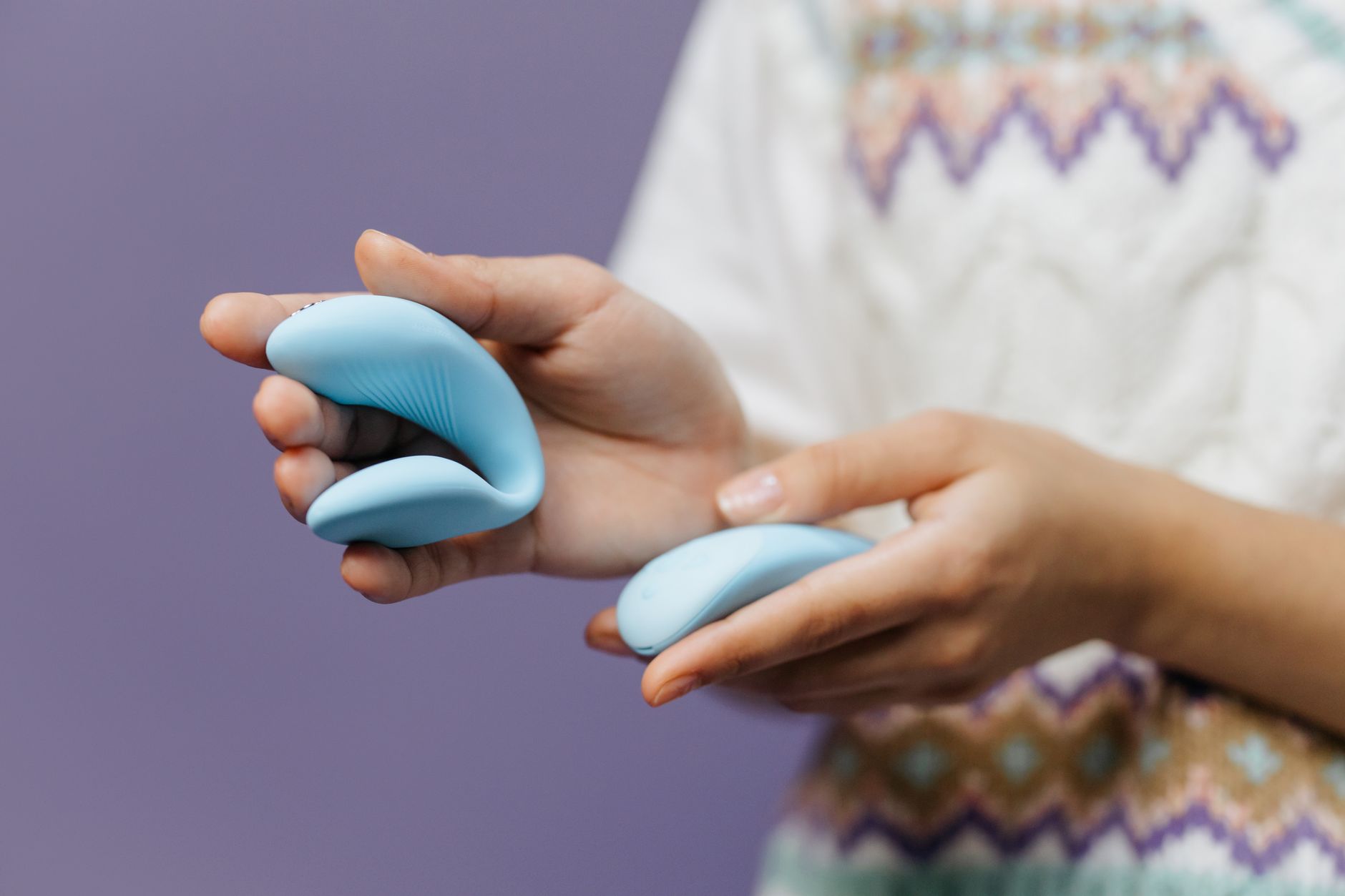
Here's what nobody tells you about sensation and your cycle
Your body is not broken when pleasure feels different on day 10 versus day 25. It's responding to real, measurable shifts in estrogen and progesterone. Most people assume their clitoral vibrator should feel the same every time they use it. That assumption is exactly why so many people get frustrated and assume something is wrong.
It's not. Your sensitivity is cycling. Your arousal curve is cycling. Your preference for stimulation intensity is cycling. And once you map those patterns, a lemon vibrator becomes dramatically more effective because you're using it in alignment with your body, not fighting against it.
The follicular phase: when sensation is sharpest
Days 1-13 (roughly, from period start to ovulation). Estrogen is rising. Your clitoris is more engorged, tissue is thicker, and nerve endings are more responsive. This is the phase where light touch feels most satisfying.
Here's the nuance nobody mentions: just because sensation is sharpest doesn't mean you want maximum intensity. Many people actually prefer gentler stimulation during this window because everything feels more. A lemon clitoral vibrator's suction pattern lets you dial in this precise sweetspot. Pattern 1 or 2 on the Lem often feels ideal when sensitivity is peaked.
You'll also notice arousal builds faster. The cognitive load is lighter (no PMS brain fog yet). You might orgasm more easily, or have multiple orgasms more readily. This is the phase where people often think they've "figured it out" and their technique is suddenly perfect. Spoiler: it's not technique. It's hormone levels.
One practical shift: warm-up time can be shorter during follicular. Your body is already primed. Five to ten minutes of foreplay instead of fifteen might feel right. Pay attention to what your body signals rather than following a schedule.
The ovulation window: when intensity peaks
Roughly days 12-16. Estrogen surges right before ovulation, then drops sharply after. During the peak, sensation and arousal are at their highest. This is when lemon adult toys often feel most intuitive to use because you want more stimulation and you want to reach orgasm.
Some people find they can comfortably use pattern 3 or 4 on the Lem during this window. Tissue is maximally lubricated. Clitoral engorgement is at its highest. If you've been using pattern 1 or 2 for ten days, jumping to pattern 3 might feel perfectly suited right now.
There's another layer: oxytocin spikes around ovulation, which means you might feel more connected to a partner (if you're having partnered sex), or more motivated to pleasure yourself. This is not random. Your body is communicating. Some people naturally extend sessions during ovulation; others prefer quick, intense sessions. Both are normal.
The one tricky part: the drop-off afterward. Ovulation ends, progesterone climbs, and sensation dulls within 24-48 hours. This is not gradual. You might hit day 17 and suddenly pattern 3 feels too intense. That's your cue to dial back.
The luteal phase: when you need different things
Days 17-28 (until your period). Progesterone is dominant. Estrogen is lower. Your clitoris is less engorged. Tissue is thinner. Arousal takes longer to build. Sensation is genuinely blunted, and that's not a deficit. It's a shift.
Here's where most people mess up: they assume they're broken because the lemon vibrator that felt perfect last week now feels like nothing. They crank the intensity. They extend sessions. They force it. Then they feel frustrated and conclude they have a problem.
Instead, consider this: your body is telling you it needs something different. Longer warm-up is useful (fifteen to twenty-five minutes). Starting lower on the intensity dial is useful (pattern 1 again, even though you were on pattern 3 two weeks ago). Using lubrication matters more now (progesterone doesn't trigger the same lubrication response estrogen does).
Some people also notice they need more mental focus during luteal. Distractions feel more disruptive. A partner's touch might feel less pleasant. Your lemon clitoral vibrator might feel better because it's consistent, non-relational, and you can control every variable. That's information. Use it.
The premenstrual window: when sensitivity is weird
Days 24-28 (approximately, the last few days before your period). Progesterone is dropping. Estrogen dips with it. Your body is in transition mode. Many people report that sensation is unpredictable. Some days feel numb. Other days are surprisingly responsive.
This is when checking in with yourself becomes important. On a numb day, longer warm-up and lower intensity work better than pushing harder. On a responsive day, you might find pleasure more easily. The lemon vibrator works well here because its suction mechanism lets you experiment without the fatigue of vibration alone.
Many people also notice that during PMS, they want shorter sessions. Five to ten minutes instead of twenty. Or they want to use the device and then move on. That's completely valid. You're not broken. You're listening to your body's actual signal.
How to track what works across your cycle
The most useful thing I recommend is boring but effective: a three-month log. Just three notes per week.
Day of cycle. Pattern you used on the Lem. How it felt (numb, perfect, too intense, good-but-different). Anything else (stress, sleep, partner situation, medication timing).
After three months, patterns emerge. You'll notice that days 12-15 are consistently "pattern 3 feels perfect." Days 22-26 are consistently "need longer warm-up." That data becomes your personal manual.
You might also notice that your cycle syncs with emotional and relational patterns. Maybe intimacy with a partner feels easiest during ovulation and early luteal. Maybe solo pleasure feels more satisfying during late luteal (when you want control). These are real phenomena, and they're not dysfunction. They're design.
What happens if your cycle is irregular or absent
If you have PCOS, you're on hormonal birth control, you're perimenopausal, or you don't menstruate for any other reason, this framework becomes less useful. Your sensation might be more stable (which is actually great for finding a consistent pattern with your lemon adult toy) or more erratic (in which case the tracking approach still helps, just without a calendar template).
The core principle stays the same: sensation is not static. Your nervous system is responsive to hormonal, nutritional, stress, and relational variables. A lemon clitoral vibrator works best when you tune it to what your body actually needs on a given day, not what it needed last month.
If you're exploring sensation for the first time, or rediscovering it after a long absence, checking in with gentler stimulation across different phases gives you baseline data without overwhelming your nervous system.
The bigger picture: pleasure as a language
Most of us were taught to think of pleasure as a switch. On or off. Good or bad. But it's actually a language. Your body is always communicating something. During follicular, it's saying "I'm sensitive, I'm responsive, quick touch works." During ovulation, it's saying "I want intensity, I want more, I want to feel it fully." During luteal, it's saying "I need patience, I need time, I need consistency."
A lemon vibrator is just a tool. The real skill is learning to listen and adjust. Once you do, pleasure stops feeling random and starts feeling like something you actually understand.
Frequently asked questions
How do I know what patterns on my lemon vibrator work best for each cycle phase?
Start with pattern 1 or 2 during follicular (when sensation is sharpest). During ovulation, experiment with pattern 3 or 4. During luteal, go back to lower patterns and add longer warm-up. Track what feels right for three months so you have data instead of guessing.
Can I use a lemon clitoral vibrator every day throughout my cycle?
Yes, absolutely. What changes is not frequency but intensity and approach. You might use lower patterns on certain days and higher patterns on others. Your lemon vibrator adapts to your cycle, not the other way around.
Does cycle syncing actually work, or is it placebo?
It's not placebo. Estrogen and progesterone have measurable effects on tissue thickness, lubrication, clitoral engorgement, and arousal speed. These are biological facts, not theories. That said, not everyone's cycle follows the textbook 28-day pattern. The point is to notice your personal pattern and work with it.
What if my sensation changes unexpectedly in the middle of a cycle phase?
That's usually stress, sleep, medication timing, relationship dynamics, or nutrition. You're not broken. Check in: did you sleep badly? Are you stressed? Did you start or stop something? Your body is responsive. The change is information.
Is it normal to feel numb during the luteal phase?
Completely normal. Progesterone is lower, estrogen is lower, and clitoral tissue is less engorged. Sensation genuinely does dull. It's not a dysfunction. It's a shift. Longer warm-up, more lubrication, and patience make it work better.
Should I tell my partner about my cycle and how it affects sensation?
Yes, if you have a partner. But frame it as useful information, not an apology. "Days 12-15, I prefer a lighter touch. Days 20-26, I need more time to warm up." That's not a problem to solve. That's a preference to honor.
The bottom line
Your sensation is not broken because it changes. It's working exactly as designed. A lemon vibrator becomes most effective when you tune it to what your body actually needs across your cycle, not what it needed last month. Start tracking for three months. Notice patterns. Adjust your approach. Your pleasure will stop feeling random and start feeling like something you genuinely understand.
If you want to dig deeper into how vibrators and sensation work together, exploring gentler stimulation with stronger results offers another angle on the same foundation. And if you're navigating sensation changes from perimenopause or medication shifts, those posts address different contexts but the same core skill: listening to your body and adjusting accordingly.