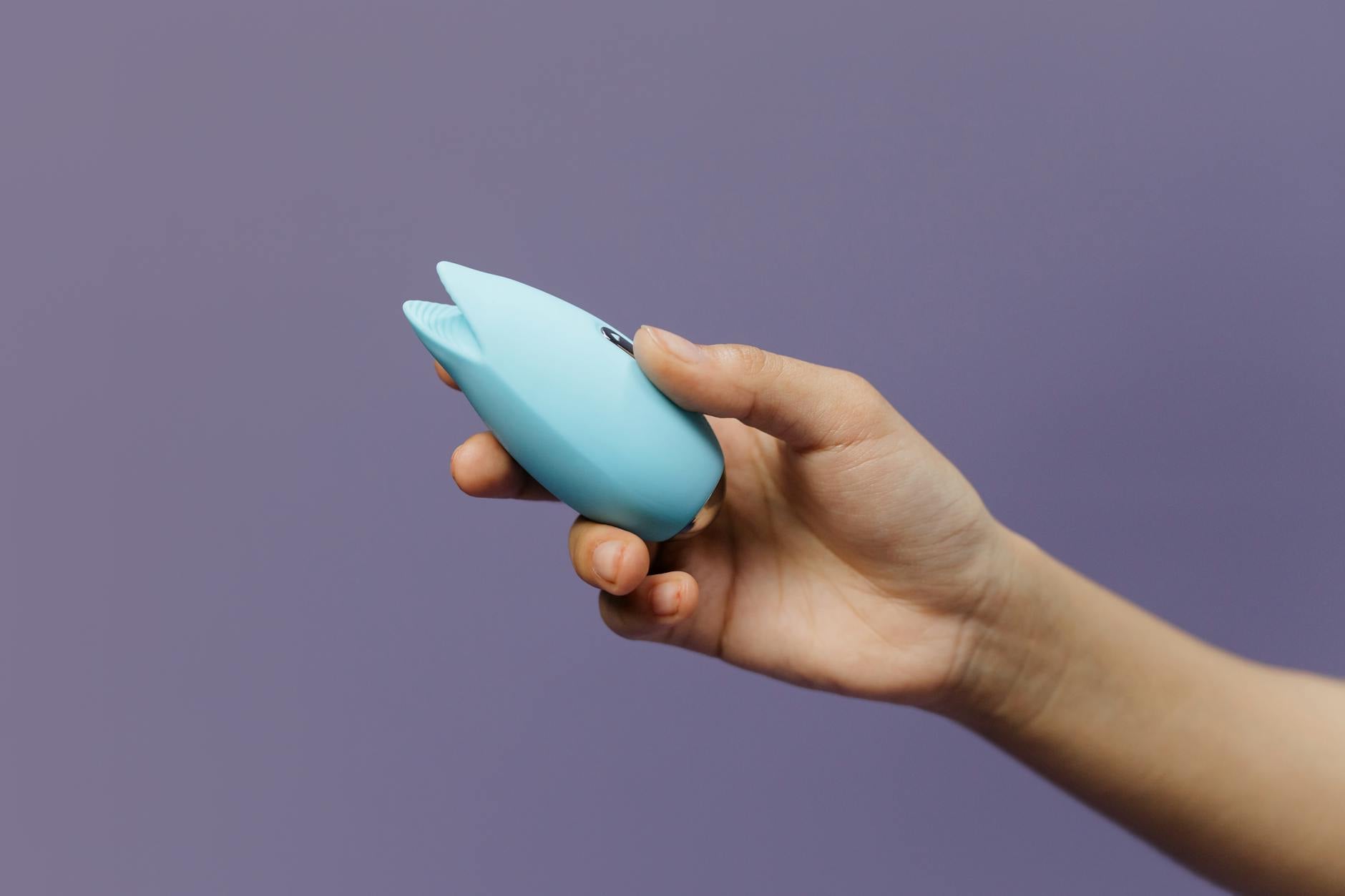
Let's be real about what he's actually afraid of
Your partner isn't worried that a lemon vibrator is too intense or that you'll hurt yourself. He's worried that it means something about him. That his body, his effort, his touch aren't enough. That you're settling for a toy because he's settling as a partner. That's not a sex problem. It's a confidence problem, and it lives in the gap between what you need and what he thinks you should need from him.
Here's what I know from two decades of couples work: that fear is understandable. And it's also completely fixable. But not by hiding the toy or pretending you don't want it. By having the conversation that actually matters.
Why he heard "you're not enough" when you said "I want a vibrator"
Most men grow up internalizing a single narrative about sex. They're told their job is to provide pleasure, that good sex means a partner orgasms from what they do, and that asking for tools or help is a failure on their part. When you introduce a lemon clitoral vibrator, he hears: I cannot do this for you. Which translates to: you have failed.
But that's not what you said at all. You said: I want to explore my body differently. Or maybe: I get there faster with air-pulse stimulation. Or simply: this feels amazing and I want to use it. None of those statements are about him.
The disconnect is real, though. And ignoring it won't make it disappear. It will just sit in the room between you every time you reach for it.
The conversation you actually need to have
Don't lead with the vibrator. Lead with the bigger picture.
Pick a moment that's not sexy, not tense, not right before bed. Sit down and say something like this: "I've been thinking about pleasure differently lately. Not about you doing something wrong, but about what I'm discovering about my own body. I want to explore that, and I'd actually love for you to be part of it. Not instead of you. With you."
Watch what happens. Most men, when they hear that they're invited in rather than replaced, shift immediately. The fear doesn't vanish, but the frame changes.
Then you can say: "A lemon vibrator gets me there in a way I haven't experienced before. It's not better than what you do. It's just different. And I want both." That "both" is everything. It tells him he's not being cut out of the script.
How to actually integrate it so he feels secure
Four approaches that work:
1. Let him watch. Not as performance. As education. Show him what makes you respond, where the sensation lands, what your body does when it's working. This does two things: it removes the mystery that's feeding his anxiety, and it actually teaches him something real about you. Most partners have no idea what clitoral stimulation feels like from the inside. Watching you use a lemon vibrator gives him that knowledge.
2. Use it together. Start with foreplay. You use the vibrator on yourself while he touches you somewhere else. Your chest, your neck, inside your thighs. This keeps him actively involved and lets him feel how your body responds in real time. He's not sitting on the sidelines. He's present and part of the experience.
3. Hand it to him. Once you're both comfortable, let him hold it. Not because he'll do it "right," but because physical control matters. It shifts the toy from "something you want instead of him" to "something you want him to use." The psychology is subtle but powerful. He's not watching anymore. He's directing.
4. Talk about what you feel. Not during sex. After. Tell him what happened in your body, what changed, what surprised you. Don't make it clinical. Say things like: "When you used it on that spot, I felt everything shift. I didn't know I could feel it that way." He needs to hear that the vibrator isn't a replacement. It's a key that unlocked something new.
The deeper reassurance he needs
Understanding why he's scared is only half the work. The other half is actually addressing the fear.
Most men worry that wanting a toy means you're not attracted to them, or that you secretly wish they were different. So tell him directly: "You turn me on. Your body does things to me that nothing else can. This vibrator is not about attraction. It's about physiology. My body has a specific way of orgasming, and this device matches that. Just like how you might prefer one position over another." That framing removes the shame.
You might also say: "I trust you enough to show you this part of myself. That's not small. That's me letting you see what I really need." Vulnerability can flip the script. Instead of feeling inadequate, he might feel chosen.
When the reassurance doesn't land
Sometimes a partner's insecurity runs deeper than one conversation can fix. If he's consistently dismissive, controlling, or won't engage even after you've tried to include him, that's a different problem. That's not about the toy. That's about whether he respects your autonomy and your pleasure.
You deserve a partner who wants you to feel good, even if that means using tools he didn't invent. If he can't get there, couples therapy is worth having. A good therapist can help him untangle why a lemon vibrator triggers such fear, and whether that fear is actually about the toy or about something else entirely (control, insecurity, beliefs about masculinity).
What often happens when you do this right
I see this pattern constantly in my practice: a woman introduces a vibrator with honesty and invitation. A man gets over his initial fear because he's actually included. And then something shifts. He stops seeing toys as competition and starts seeing them as expansion. They use it together. He finds he likes it. She feels more satisfied. The sex becomes less about proving something to each other and more about actually enjoying each other.
Sometimes he even asks about trying new things after that. Because he's no longer defending against an imagined failure. He's exploring with you.
The real thing your partner needs to understand
Your pleasure is not a referendum on his manhood. A lemon clitoral vibrator isn't a verdict that he's fallen short. It's a tool, the way a vibrator or lube or any other thing is a tool. His job isn't to be everything your body needs. His job is to want you to feel good, and to show up when you need him.
If he can get there, you've got something real. If he can't, you've learned something important about who he is. Either way, you get to keep wanting what you want.