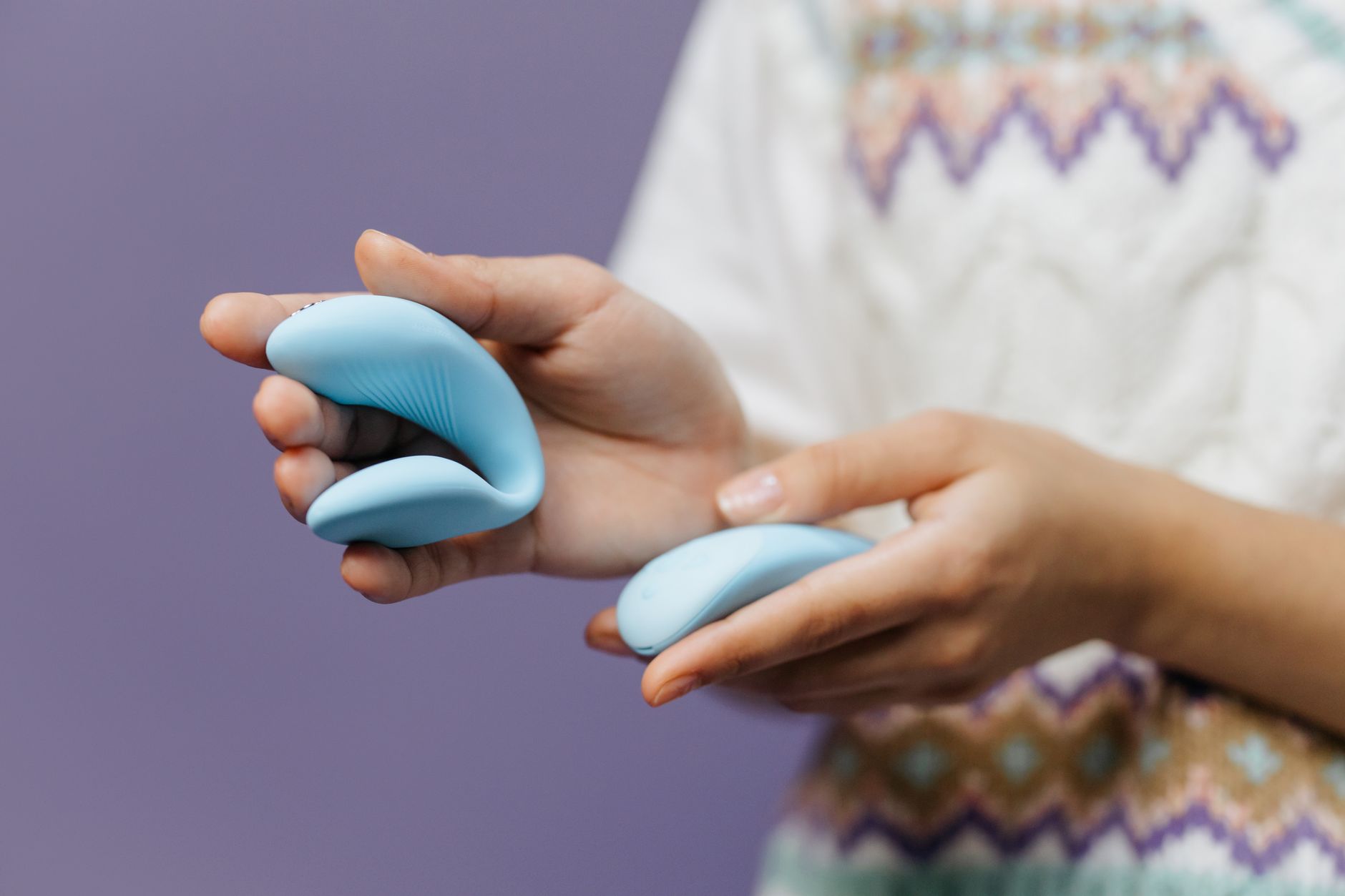
Let's start with the fear
He thinks you're bored. She thinks you're saying she's not enough. They think you want to replace them. That's the narrative running beneath most couple conversations about vibrators. And it's almost never what you actually mean.
Here's the thing. Most partners aren't rejecting the toy itself. They're reacting to the story they just invented about what the toy means. If you lead with "I want us to try a lemon vibrator," they hear "I'm not satisfied." If you lead with "I've been thinking about what would help me feel closer to you," suddenly you're speaking the same language.
The difference is real. And it changes everything.
Why this conversation matters
You're not just introducing a product. You're saying something about what you want from your intimate life together. Partners who feel blindsided by toys often retreat into defensiveness. Partners who feel consulted, even if they're initially nervous, usually come around.
Research on couples and sex toys shows the same pattern repeatedly. The presenting issue isn't the vibrator. It's whether your partner felt heard, included, and secure in the decision. A lemon clitoral vibrator that arrives as a surprise creates distance. The same toy, introduced thoughtfully over a real conversation, often becomes a bridge.
I work with couples where one person has been fantasizing about toys for years and never mentioned it. When the toy finally appears, it lands like a betrayal. The shame spirals backward. None of that had to happen.
The three reframes that work
Reframe 1: This isn't about insufficiency. It's about wanting more sensation.
Your clitoris has thousands of nerve endings. Air-suction toys like lemon vibrators stimulate them differently than fingers or a partner's mouth. It's not that those things don't feel good. It's that sensation variety amplifies pleasure. You're not trading one thing for another. You're adding a layer.
The language matters. "I want to explore what different kinds of touch feel like" is very different from "I want something you can't give me." One is curious. One is comparative. Stay curious.
Reframe 2: This is about increasing connection, not replacing it.
Here's what I see work with couples. The partner who's nervous about toys often softens when they realize they're part of the experience. Using a lemon vibrator together isn't solo play. It's collaborative. It's you showing your partner exactly what feels good, them watching your face change, you being vulnerable about your own pleasure.
That's intimate. That's the opposite of exclusion.
Reframe 3: This isn't a referendum on your relationship. It's an experiment.
Framing it as "something we might enjoy trying" rather than "I've decided we should do this" changes the power dynamic entirely. You're inviting your partner into exploration, not announcing a decision. And you're making space for them to say no, or not yet, or let's try something else.
Consent flows both directions.
The actual conversation
Timing first. Don't bring this up mid-conflict or when one of you is tired. Pick a calm moment when you both have space. Not during sex. Not right before. A regular conversation, over coffee or a walk, signals that this is something you've been thinking about intentionally.
Opening line matters too. "I want to talk about something I've been thinking about" works better than "We should try this." It's softer. It signals you're not demanding.
Then you say something like:
"I've been curious about trying a clitoral vibrator together. I think it would feel amazing, and honestly, I think it could be really hot to explore that with you. I'm not saying anything is missing. I just want to experience more sensation, and I'd rather do that with you than alone."
Notice what's in there. You're naming the specific desire. You're being clear about what you're not saying (that something is wrong). You're expressing a preference for partnership. And you're leaving room for their response.
Then you listen. Really listen. If they're uncomfortable, ask why. Don't defend. Just understand. "What's coming up for you?" is a powerful question. It lets them articulate the fear instead of letting it fester.
Common reactions and how to move through them
"I thought I was enough."
This is almost always the core fear. Your response: "You are. This isn't about you. It's about me wanting to experience different sensations. I want to do that with you, because being vulnerable with you turns me on more than anything."
If they stay stuck here, ask if they'd want to try it together. Watching you use a lemon vibrator might shift their perspective. Seeing you pleasure yourself while they're involved, rather than it being a solo thing, can reframe the whole experience.
"That's weird, I don't know anyone who does that."
That's actually not true. Couples research shows about 40% of partnered people have used sex toys together. But the real response is: "Actually a lot of couples do. And I don't think it matters what anyone else does. I care what we do."
"I'm not comfortable with it."
That's a boundary. Honor it for now. Ask if they'd be open to revisiting the conversation in a few months. Sometimes people need time to sit with something new. Sometimes the discomfort eases once they've processed it.
But also be honest with yourself. If this is important to you and they're flatly refusing to ever engage with it, that's information about compatibility that matters.
When they say yes (or maybe)
Start small. Suggest using a lemon vibrator during foreplay, not as the main event. You're both getting used to the idea. There's less pressure. You can pause anytime.
Show them how you like to use it. This is radically important. Your partner isn't a mind reader. If you want them to watch, tell them. If you want them to touch you while you use it, say that. If you want them to use it on you, be clear. You're directing the scene, which means you're in control.
And honestly, the first time might feel awkward. That's normal. New things usually do. It doesn't mean it's wrong.
The longer view
Some couples find that exploring lemon vibrators together becomes part of their regular intimate life. Others try it once and move on. Both are fine. The goal was never to become a vibrator couple. The goal was to communicate, to stay curious, and to prioritize each other's pleasure without shame.
You're building a relationship where desire is safe to name. Where experimentation is invited. Where your partner knows they can tell you what they want without judgment. That's the actual win. The toy is just the vehicle.
The couples I see thriving aren't the ones who have perfect sex. They're the ones who can talk about sex without bristling. Who can laugh when something feels awkward. Who stay interested in each other's pleasure instead of getting rigid about how things "should" be.
Introducing a lemon vibrator, done well, is practice in that. Which means the conversation isn't a risk to your relationship. It's actually an investment.
Frequently asked questions
What if my partner feels like toys are "cheating"?
That's a values conversation. Ask them what cheating means to them. Usually it's about honesty and exclusivity. A toy doesn't violate either of those. If anything, being open about what you want is the opposite of cheating. But if they truly believe toys are a betrayal, you need to understand why before you can move forward. Sometimes it's about insecurity that needs addressing. Sometimes it's genuine discomfort with the idea. Both are valid starting points for dialogue.
Should I buy the toy before or after the conversation?
After. Always after. Showing up with a toy you've already bought signals that you weren't really asking for their input. You were just informing them. Have the conversation first. If they're open to it, shop together or ask them to pick one. Making the choice collaborative keeps it from feeling like something you imposed.
What if they want to try it but I'm suddenly nervous?
That's okay too. You don't have to use it just because you suggested it. You can say, "I'm feeling more nervous than I expected. Can we take a beat?" Your partner should respect that. And if you do want to try eventually, you can revisit it when you feel ready.
Can we use a lemon vibrator if my partner has erectile dysfunction?
Absolutely. In fact, many couples find that adding clitoral stimulation during partnered sex takes the pressure off performance. It's not about him being able to penetrate. It's about both of you experiencing pleasure. That often reframes sex entirely and can actually help with ED-related anxiety.
What if I want to use it solo during sex and my partner isn't ready for toys?
That's a boundary you get to have. You can explore solo pleasure outside of partnered sex, and your partner doesn't have to be involved. But if you want to incorporate it into your time together eventually, keep communicating. People often come around when they see it's genuinely part of your pleasure and not a rejection of them.
How do I know if my partner will actually enjoy it too?
You won't until you try. But some people get more aroused watching their partner use a toy than they expected. Some people want to use it on their partner. Some people want nothing to do with it and that's fine. The conversation opens the door. Actually using it shows you what works. There's no way to skip to the ending.
The real bottom line
Introducing a lemon vibrator to your partner isn't actually about the toy. It's about building a relationship where desire is negotiated openly. Where pleasure matters for both of you. Where trying something new doesn't feel like betrayal.
That conversation is terrifying for a lot of people. But it's also one of the most connecting things couples do. Because you're saying out loud: I want you. I want to feel more with you. I trust you enough to be vulnerable about what turns me on.
That's the opposite of distance. That's actual intimacy.
Ready to have the conversation? Get in touch if you need support navigating relationship questions or want to explore what works for your specific dynamic. And if you're looking to try a lemon clitoral vibrator with your partner, the Lemon Vibrator by Lems Sex Toy is designed for partnered play as much as solo exploration.
References and sources
The data on couples and sex toy usage draws from multiple sources in sex research and couples therapy. For deeper exploration of communication strategies in intimate relationships, consider consulting the Gottman Institute's research on couples communication, as well as scholarly work on sexual health and relationship satisfaction by sex educators and therapists specializing in couples dynamics.