When medication saves your life but costs your sex drive
Let's be direct. You didn't choose between your mental health and your sex life. That wasn't an option on the form. But somewhere in year two or three of the antidepressant that stopped your panic attacks, or the beta blocker that steadied your heart, or the antipsychotic that let you think clearly again, pleasure went quiet. Not gone. Quiet. And nobody warned you it might not come back automatically.
This is one of the most common side effects people never talk about, partly because it's humiliating, partly because prescribers often shrug and offer a different medication that works differently on the dopamine pathways. Sometimes that helps. Often it just trades one flatness for another. What matters now is that you're here, you want to rebuild, and you're not broken for needing tools to do it.
Why medications flatten arousal in the first place
Different medications work through different pathways, which is why the side effects vary so wildly. SSRIs and SNRIs (serotonin and norepinephrine reuptake inhibitors) are the most common culprits. They boost serotonin in the brain, which can help depression, but they also affect blood flow, dopamine (the motivation chemical), and the neural signals that prime arousal.
Beta blockers lower blood pressure by slowing your heart rate and reducing vascular response. That same mechanism that prevents a racing heart can also muffle genital blood flow, which is kind of important for arousal. Anti-psychotics, mood stabilizers, and even some blood pressure meds carry the same risk.
The maddening part. The very thing keeping you functional is the same thing making sex feel distant. Your brain knows what pleasure should feel like, but your body isn't getting the signal. It's not laziness. It's not relationship trouble. It's pharmacology.
The difference between "dampened desire" and "dampened sensation"
These are two separate problems that often travel together, but they need different solutions.
Dampened desire means the thought of sex doesn't light you up anymore. You're not thinking about it. You don't miss it. The motivation system in your brain has gone quiet. This is often dopamine-related and can be the hardest to address, because it's a motivational fog, not a mechanical one.
Dampened sensation means you want to, but when you touch yourself or your partner touches you, the feedback is muted. You can feel it, but it's like touching through a thick glove. Everything registers, but barely. This is often vascular or nerve-signal related, and it's where lemon clitoral vibrators actually make a measurable difference.
If you have both, that's also normal. Don't panic.

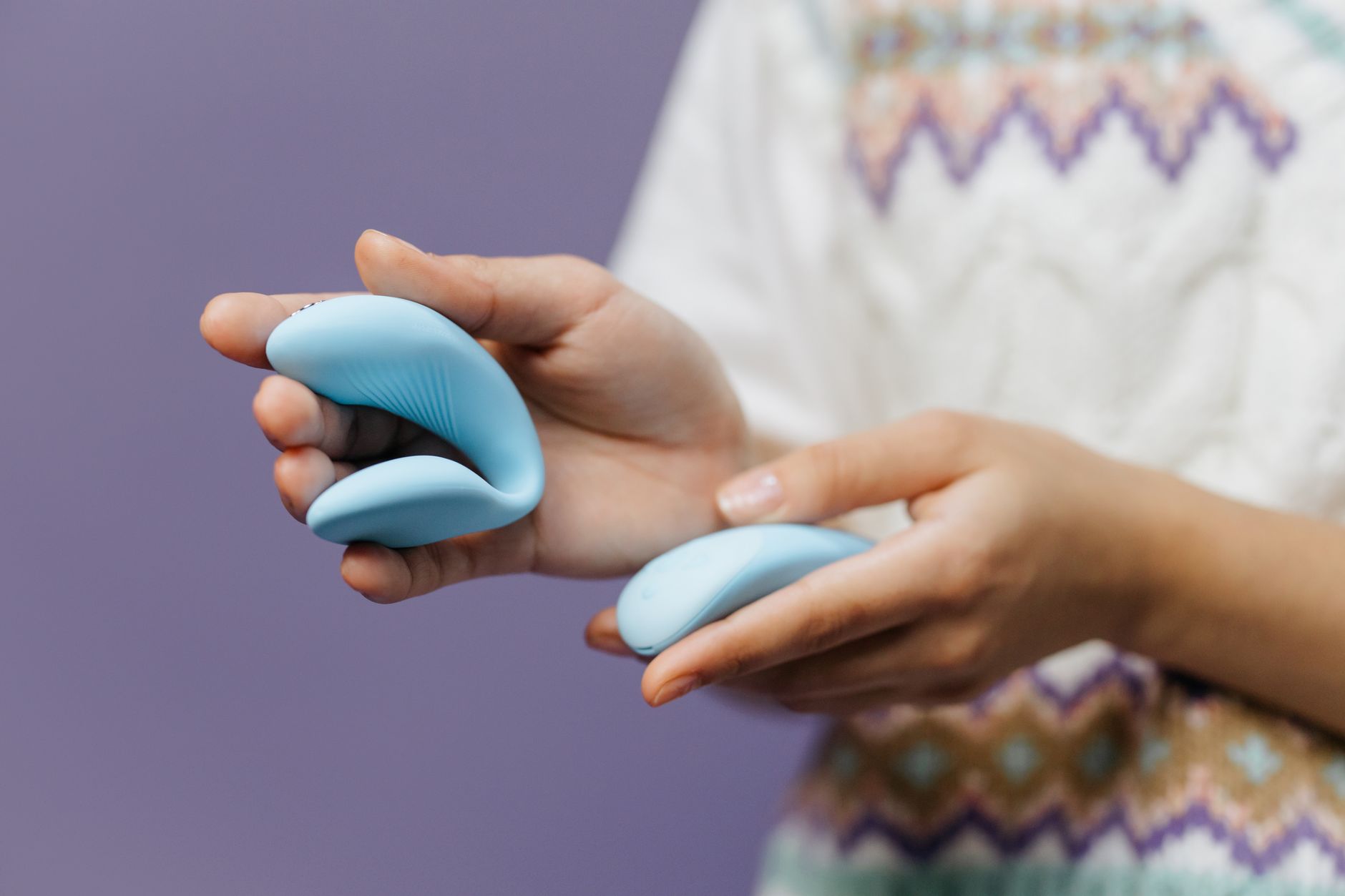
Photo by Ihsan Adityawarman on Pexels
Why lemon vibrators work when sensation feels muted
Lemon vibrators, including the Lem clitoral vibrator, use air-pulse stimulation instead of traditional vibration. This matters more than you'd think when sensation is already dampened.
Traditional vibrators buzz at a constant frequency. If your nerves aren't firing crisply because of medication, that constant buzz can feel mushy or one-note. Air-pulse tech (suction) creates rhythmic pressure waves that engage different nerve pathways and create more distinct sensations. It's like the difference between a steady hum and a pattern you can actually follow.
The other advantage: gentleness that delivers impact. Lemon clitoral vibrators start at low intensities and build. For someone whose arousal takes longer to ramp up because of medication, that matters. You're not fighting through numb tissue to reach a strong vibration. You're working with gentler pulses that wake up sensation gradually.
Also practical: air-pulse technology is less likely to cause the desensitization that can happen with powerful vibration over long term use. You're less likely to numb yourself further while trying to feel something.
Rebuilding desire when motivation is flatlined
If dampened sensation is the easier problem to solve, dampened desire is the harder one. You can't will yourself into wanting sex. But you can build structure that lets desire return on its own schedule.
Start small and scheduled, not spontaneous. When medication flattens dopamine, you need scaffolding. Set a specific time. Tuesday and Thursday nights, or Sunday morning. Something predictable. This removes the mental load of "should we, or should we not" and lets your brain know it's safe to shift into that mode.
Separate arousal from outcome. You're not trying to have an orgasm. You're trying to practice feeling. Put a lemon vibrator on the lowest setting and spend fifteen minutes with it. Not with a goal. Just noticing what you feel. This takes pressure off and often lets pleasure creep back in through the back door.
Rebuild the context. Medications that affect dopamine also affect novelty seeking. The same bedroom, the same partner, the same everything can feel tedious instead of comforting. Change something. Different room, different time of day, something that feels slightly transgressive. Novelty helps dopamine systems come back online.
Talking to your prescriber about this without shame
Your doctor needs to know. Not for blame. For problem-solving.
Some medications have equivalent alternatives that hit your condition without the sexual side effects. Not always, but sometimes. Your prescriber won't know to look unless you tell them. Use the actual words. "I'm experiencing sexual side effects" beats dancing around it.
If switching medications isn't an option, ask about augmentation strategies. Some prescribers add low-dose bupropion (which affects dopamine differently) or adjust timing. Some recommend specific supplements, though evidence is mixed. Some just validate that yes, this is real and yes, you have permission to use tools like lemon vibrators to work around it.
Don't wait years hoping it resolves. It often doesn't without intervention.
Practical steps for rebuilding arousal with tools
Assuming you've got a lemon clitoral vibrator or similar air-pulse toy in hand, here's what actually rebuilds sensation when it's been flattened:
Week one through two: Use it solo. Twice weekly, fifteen minutes. Lowest intensity, exploring. No goal except "what does this feel like." Your nervous system needs to remember what pleasure signals feel like without performance pressure.
Week three through four: Increase duration to twenty minutes if it feels good. You can experiment with intensity, but don't jump to maximum. Let sensation build slowly. This is patience, not punishment.
Week five onward: If you have a partner, introduce them. Let them hold the vibrator. This relinks pleasure with connection and shared attention. The dopamine boost from partnership can help arousal return faster than solo play alone.
If desire is still flatlined after four weeks of consistent practice, this is a conversation to bring back to your doctor. Sometimes the medication side effect is just permanent at that dose, and you need to make an intentional choice about whether staying on it is worth it, or whether switching or stopping is better.
When to consider medication adjustment
You don't have to accept sexual side effects as the price of staying well. That's a myth.
If you've been on the same medication for over a year and pleasure hasn't returned, the side effect is likely stable and not going to resolve on its own. At that point, you have options: dose adjustment (sometimes lower dose has fewer sexual effects), timing adjustment (taking it at a different time of day can help), switching to a different class of medication, or adding something to counteract the side effect.
None of these are easy decisions. All of them require working with someone who knows your full picture. But the point is this: you don't have to stay numb. There are paths forward.
The framework for long-term pleasure after medication
Rebuilding arousal after long-term medication side effects isn't about forcing your body back to baseline. It's about meeting yourself where you actually are and building from there.
Use tools that work with your current nervous system, not against it. Lemon vibrators and other air-pulse toys make sense here because they're gentler but more precise than traditional vibration. Build structure instead of waiting for spontaneous desire to return. Work with your doctor instead of against them. And give yourself permission to need more time, more patience, and more tools than you expected.
Your sex life isn't over. It's just different now. And different can actually be better once you stop fighting it.
People also ask
Can lemon vibrators actually help with medication-related numbness?
Yes, but with realistic expectations. Air-pulse technology like the Lem vibrator creates distinct sensations that can penetrate numbness better than traditional vibration. The key is consistency and patience. You're not trying to blast through the numbness in one session. You're gradually retraining your nervous system to recognize and process pleasure signals. Most people notice a shift in sensation within two to four weeks of regular use.
How long does it take for sensation to come back after starting a medication?
It varies widely depending on the medication, your individual neurobiology, and how long you've been on it. Some people notice the side effect within weeks. Others take months to realize. And some people stay numb indefinitely until something changes. The frustrating truth is that there's no standard timeline. If you're six months in and nothing's improved, that's a good conversation point with your prescriber, not a sign you should just accept it.
What if my partner wants sex but I feel nothing?
This is deeply common and deeply stressful. First, separate the two conversations. "My body is responding differently to medication" is not the same as "I don't want you." Your partner might interpret numbness as rejection. It's not. It's a side effect. Tell them explicitly. Then, decide together whether you want to work on rebuilding sensation, whether you want to explore sex differently, or whether you want to put that part of your relationship on pause while you figure out medication stuff. All of those are okay. What's not okay is staying silent and letting your partner guess.
Is it normal to need a vibrator to feel pleasure while on antidepressants?
Completely normal. Antidepressants are some of the most common culprits for sexual side effects because they affect the neurochemistry of arousal. A lemon clitoral vibrator or similar tool isn't cheating or admitting defeat. It's a practical accommodation, like using reading glasses or a heating pad. You're not broken for needing it. You're smart for using it.
Can I stop my medication if it's killing my sex drive?
Not without talking to your doctor first. Stopping certain medications abruptly can be dangerous. But yes, you can have a conversation about whether this specific medication is worth the trade-off for you. Some people decide it is. Some decide it isn't. Some find an alternative that works better. The point is that it's a choice you get to make with proper medical support, not something you have to accept in silence.
How do I bring this up with my doctor without embarrassment?
Use the clinical language. "I'm experiencing sexual side effects" is clear and professional. You can be more specific if you want: "I'm noticing dampened sensation" or "I'm not feeling motivated for sexual activity anymore." Good doctors hear this regularly. If your doctor gets dismissive or jokes about it, that's a sign to find a different prescriber. Your sexual health is part of your overall health, and it deserves to be taken seriously.
Next steps
If medication side effects have stolen your pleasure, you're not looking at a permanent loss. You're looking at a problem that responds to patience, the right tools, and medical support. Start a conversation with your prescriber about whether adjusting your medication is an option. Explore lemon vibrators or similar air-pulse toys that work gently but precisely. And give yourself credit for doing the work to reclaim something that matters to you.
If you want to talk through your specific situation or need support navigating medication changes and their sexual side effects, reach out. That's what I'm here for.