Let's be real about the awkwardness
Introducing your partner to lemon vibrators can feel like a risk. You're not sure if they'll think it means something about them. You're worried they'll feel replaced. You're also maybe thinking, 'What if I say this wrong and we end up in a fight?' That's all completely normal. What's less normal is the myth that this has to be a huge, dramatic conversation.
It doesn't. In fact, the least likely way to help your partner get comfortable with clitoral vibrators is to turn it into a speech.
The thing nobody tells you about toy introductions
Most people assume their partner is going to feel threatened or rejected. Some partners do. But the more common response, once you strip away the initial surprise, is curiosity mixed with relief. Relief that there's finally a tool that can help deliver consistent pleasure without putting all the pressure on them.
I've worked with dozens of couples navigating this exact moment. The ones who move through it smoothly have one thing in common: they skip the big conversation and start with context instead.
Why lemon vibrators specifically work better for this
Here's the practical part. Lemon vibrators like the Lem are designed with suction-based stimulation, which feels completely different from anything a partner's body can do. This matters because it removes the comparison trap entirely. You're not using it because their fingers aren't good enough. You're using it because it does something their body literally can't. That distinction changes everything.
A traditional vibrator can feel like a replacement. A lemon clitoral vibrator feels like an addition. The sensation is so specific that your partner understands immediately that you're adding something, not substituting anything.
Second, lemon vibrators have a learning curve that naturally involves your partner. They're curious about how it works. They watch. They ask questions. That process of watching and understanding is where comfort actually builds.
The three-step introduction that actually works
Step one: Context before the tool. Don't pull out a vibrator cold. Plant a seed first. "I've been thinking about trying something new" or "I read about how clitoral vibrators work differently than I expected" or even just "There's this thing I want to try together." Low stakes. No pressure. Just information.
Step two: Show, don't tell. The next time you're intimate, mention you'd like to try it. Keep it practical. "I want to see if this works for me" beats "I need this to orgasm." The first is exploratory. The second sounds like a complaint.
Step three: Narrate what's happening. Once you start using it, talk through the experience. "This feels weird in a good way" or "It's quieter than I expected" or "It's interesting how this feels different." You're not performing for your partner. You're inviting them into the experience as an observer and participant. They'll ask questions. You answer them. Comfort builds through conversation, not silence.
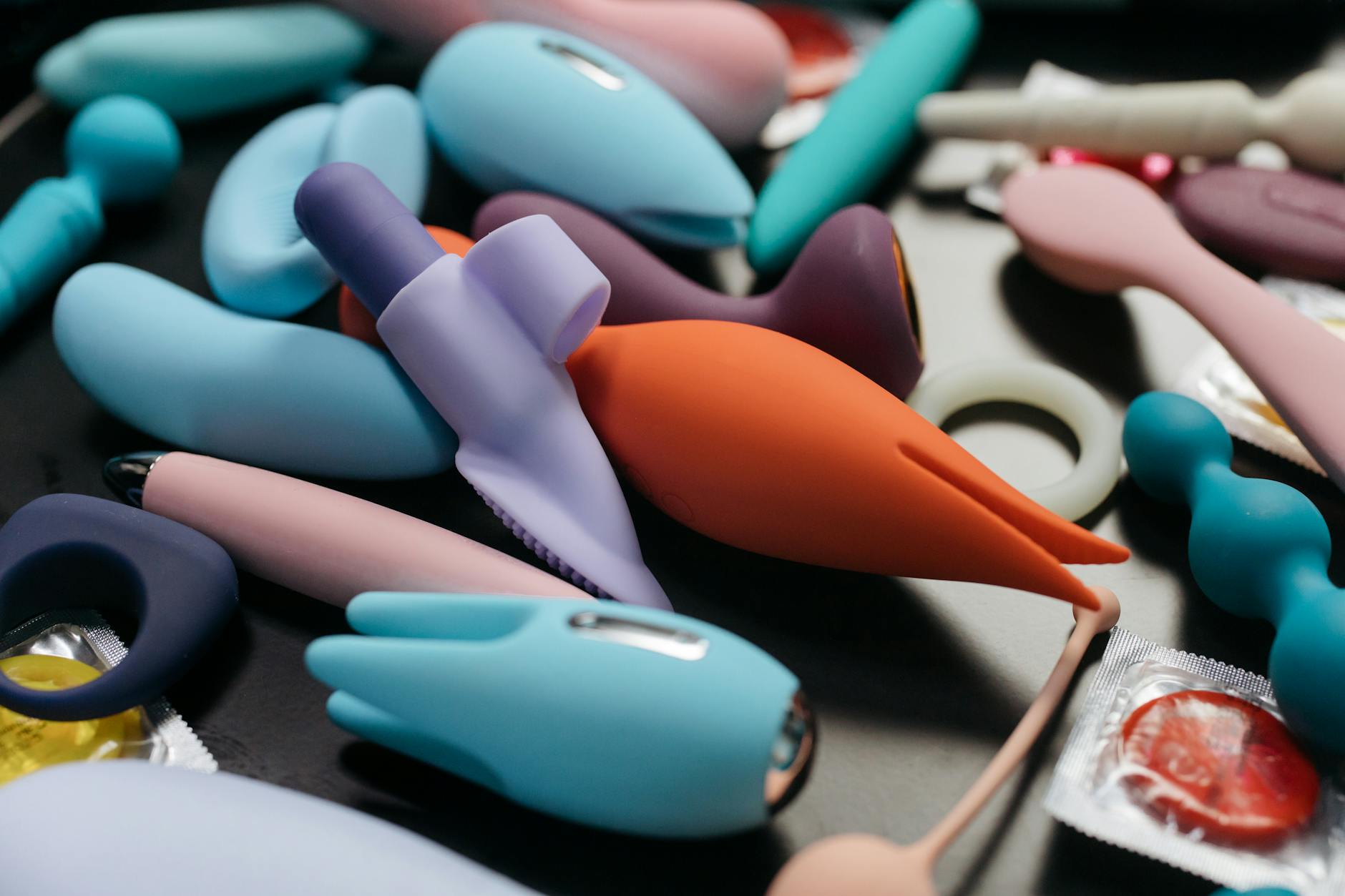
Photo by cottonbro studio on Pexels
What your partner actually needs to hear
If your partner does express concern, here's what lands:
"This isn't about you. It's about my pleasure working differently than it used to. A clitoral vibrator like the Lem does something my body responds to. That doesn't mean I don't want you. It means I want you plus this." That's the whole truth. Stay there.
Avoid: "You're not enough." "I can't come without it." "Everyone uses toys now." These are conversation killers. They sound defensive or accusatory. Stay in the frame of addition, not deficit.
If your partner has deep-rooted shame or insecurity about sexuality in general, a lemon vibrator won't fix that. But in most cases, when you approach it matter-of-factly and keep pleasure centered, people adjust quickly. The adjustment usually takes about three to five sessions before it feels normal.
The partner role that actually helps
Once your partner has seen you use a lemon clitoral vibrator a few times, many want to get involved. Some want to hold it. Some want to watch more closely. Some want to use it on you. All of these are ways they're working through their own curiosity and building comfort.
If your partner wants to participate, give them clear feedback. "A little lower" or "That pattern feels good" or "Actually, I want to do this part myself." Specific direction is way sexier than vague enthusiasm. It also helps your partner feel like they're contributing, not just watching.
Some partners want nothing to do with it. That's fine too. Respect that boundary. Use your lemon vibrators when you're alone or when your partner has indicated they're okay with it. Pleasure doesn't require an audience.
When a partner stays uncomfortable
If weeks go by and your partner is still hostile or deeply uncomfortable, there's something else underneath. Maybe shame about sexuality in general. Maybe anxiety about change. Maybe something about the dynamic between you that needs addressing first.
This is where the conversation does matter. Not about the toy. About what the toy represents to them. "I noticed you seem upset about this. I want to understand what's going on for you." That's the opening to something deeper.
If that conversation doesn't land, it might be worth working with a couples therapist. Avoidance around pleasure often signals avoidance around other intimacy. A skilled therapist can help you both understand what's actually happening and whether it's about the toy or about something else entirely.
The practical stuff that smooths everything
Store your lemon vibrators where your partner can see them. Seriously. The shock factor fades fast when there's no big reveal. If it's just sitting on the nightstand like a normal item, your partner gets used to it existing. When they go to use it is entirely up to them.
Keep the conversation light. You don't need to check in constantly about how they feel about clitoral vibrators. That turns pleasure into something to analyze instead of something to experience. Use it, enjoy it, move on.
If your partner wants to try it on themselves, let them. Some people discover they like the sensation too. Some try it once and decide it's not their thing. Both outcomes are fine. The goal isn't to get your partner using lemon vibrators. The goal is to remove shame and build openness around your own pleasure.
The bigger picture
Introducing your partner to tools like lemon vibrators is actually one of the healthiest things a couple can do together. It signals that you're willing to communicate about pleasure, experiment, and prioritize your own experience. That willingness extends to every other part of your relationship.
Your partner might surprise you. They might become curious. They might want to explore more. Or they might stay content as an observer who's glad you're getting what you need. All of those are good outcomes. The only bad outcome is staying silent and resentful about what you're not getting.
Take the risk. Not the risk of judgment, but the risk of honesty. That's where everything actually changes.
People also ask
How do I tell my partner I want to use a clitoral vibrator during sex? Keep it simple and direct. "I'd like to try using a vibrator during sex. I think it would feel good for me." Avoid making it sound like you're replacing them or like there's something wrong. Frame it as something you want to add to the experience. If they ask why, be honest: "It provides a kind of stimulation I respond to." That's enough.
Will my partner feel threatened if I use a lemon vibrator? Some partners do initially, but most don't once they understand what a lemon clitoral vibrator actually does. Because the sensation is so specific to suction-based stimulation, it doesn't feel like a replacement. It feels like a tool, similar to how you might use lube or a position change. The key is not making it a secret. Shame thrives in silence.
Can my partner use a lemon vibrator on me? Absolutely. In fact, many partners enjoy being part of the experience once they get over the initial awkwardness. If your partner wants to hold the vibrator or use it on you, that can actually strengthen intimacy because you're collaborating. Just give them clear direction so they feel like they're helping, not just following instructions.
What if my partner refuses to accept that I want to use lemon vibrators? That's worth exploring separately from the toy itself. Persistent refusal to accept your pleasure needs might signal a larger dynamic issue worth addressing with a couples therapist. You deserve to enjoy your own body. A partner's discomfort with that is something to take seriously, but it's not a reason to deny yourself pleasure.
Is there a right time to bring up clitoral vibrators? Not during sex, and not during a fight. Find a calm moment when you're both relaxed and have time to talk. The conversation doesn't need to be long. A few minutes is enough. Keep it brief, low-pressure, and focused on what you want to explore, not on anything lacking in your relationship.
How often do couples argue about toys? More often about shame and communication than about toys themselves. Most arguments happen because someone introduced the idea poorly, or because there's deeper insecurity underneath. If you approach it as a practical choice rather than a referendum on your relationship, most partners come around within a few sessions.
Final thought
Your pleasure matters. Your partner's comfort matters too. These things aren't in conflict. Taking time to introduce lemon vibrators thoughtfully, without shame or pressure, actually deepens intimacy between partners because you're choosing honesty and openness. That's the real win here. The vibrator is just the tool.
Ready to have that conversation? Start with context, move to experience, and let curiosity do the work.