Here's the thing about conflict and desire
After a real fight with your partner, your body remembers the tension long after the words stop. The nervous system is flooded with cortisol. Your pelvic floor tightens. Touch that normally feels good suddenly carries the weight of unresolved hurt, defensiveness, or resentment. Many couples avoid sex entirely for days or weeks after conflict because the gap between "we're still angry" and "let's have sex" feels impossible to bridge.
But here's what I've seen in years of couples work: that gap doesn't need to close all at once. Rebuilding intimacy after conflict isn't about forcing desire back. It's about creating micro-moments of safe touch and pleasure that remind your bodies you still belong to each other. And lemon vibrators, specifically their gentle air-pulse design, are quietly powerful tools for that work.
Why traditional sex feels off-limits after a fight
Conflict creates what I call "somatic mistrust." Your body stops believing that touch is safe or consensual, even when your brain knows intellectually that the fight is over. This is normal neurobiology, not a sign your relationship is broken.
Penetrative sex or intense manual stimulation after conflict can feel invasive. You're hyper-aware of power dynamics. You're monitoring your own arousal instead of experiencing it. The pressure to orgasm, to perform pleasure you don't feel yet, amplifies everything. Many people freeze up entirely.
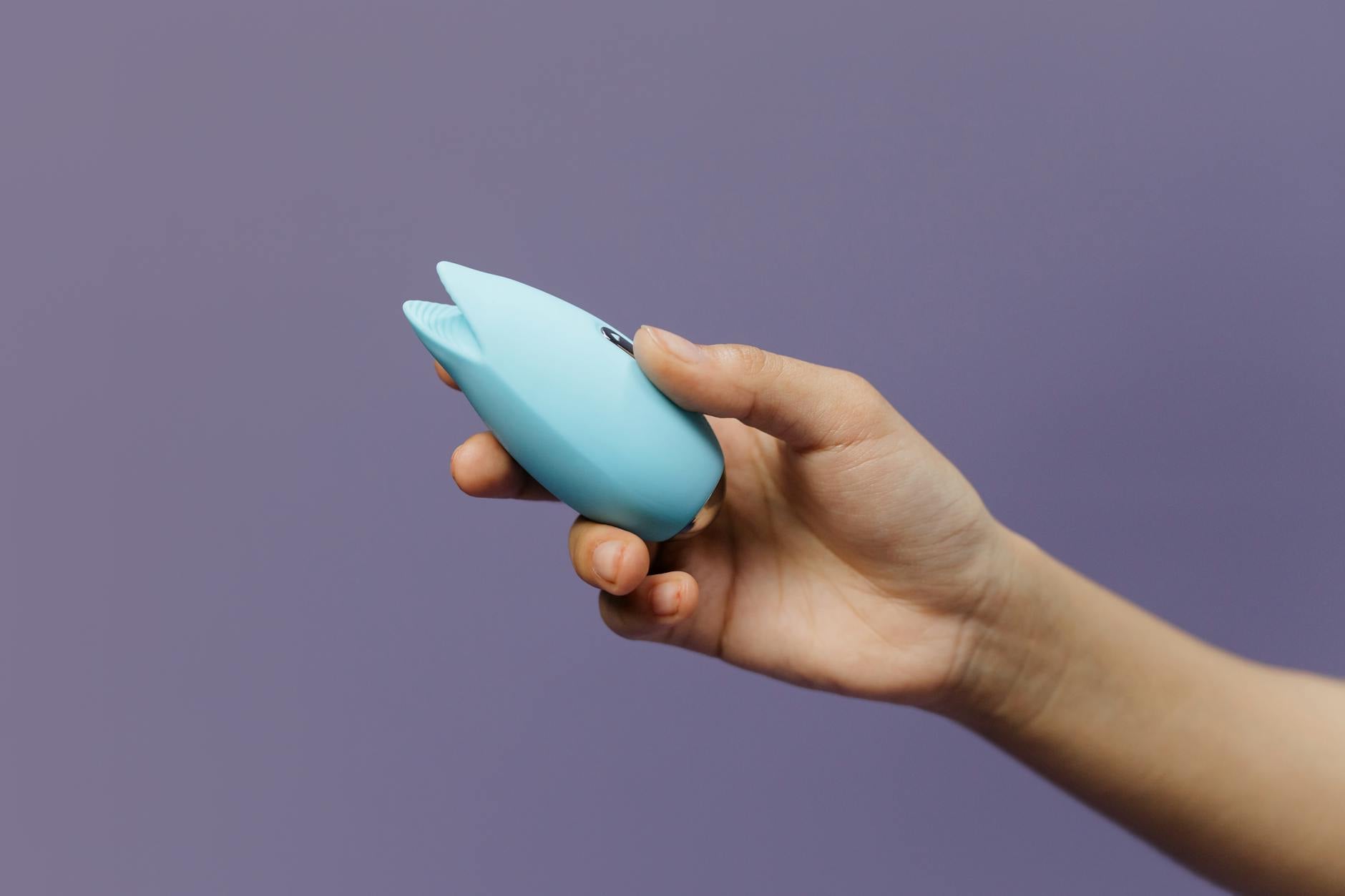
What works better is external-only, non-penetrative touch that you control completely. And within that, tools that feel less aggressive than fingers or traditional vibrators. Lemon clitoral vibrators with their signature suction design feel almost nurturing by comparison. They don't require you to surrender or accommodate. You're in total command.
The neuroscience of rebuild
When conflict subsides, your nervous system needs to shift from "threat mode" back to "safety mode." Pleasure is one of the fastest ways to signal that shift. But not intense pleasure. Gentle, consistent stimulation.
Lemon vibrators, especially at lower intensity settings, activate the parasympathetic nervous system. The suction pattern feels rhythmic and predictable, which your brain reads as safe. You're not bracing against surprise or intensity. Instead, you're in a state of trust with the tool itself, which paradoxically makes it easier to extend that trust back toward your partner.
Many couples find that solo pleasure with a lemon vibrator in the days after conflict actually opens the door to partnered touch faster than trying to jump straight to sex. You're reminding your body that pleasure is possible. That it's safe. And that sense of safety is contagious in a relationship.
Why air-pulse design matters specifically
Traditional vibrators create numbing. The constant buzzing, especially at high frequencies, desensitizes tissue and nerve endings. After conflict, you're already disconnected from physical sensation. Adding numbness on top of that isolation just deepens the gap.
Lemon vibrators work differently. The rhythmic suction pattern mimics the kind of stimulation that keeps nerve endings awake and responsive. Your clitoris stays sensitive. Pleasure builds naturally instead of requiring more and more intensity to feel anything at all.
This is crucial in a rebuild context because you're trying to reconnect, not anesthetize. You want your body to feel more, not less. You want sensation that reminds you you're alive, that pleasure is available, that your partner's presence can eventually mean good things again. Lemon clitoral vibrators deliver that without the numbing tax.
The conversation you need to have first
Using a toy to rebuild after conflict only works if you talk about it first. Not during the fight. Not when you're trying to have sex. During a calm moment when you're both regulated.
Here's how I usually guide couples to frame it: "I want us to reconnect physically. I'm not ready for sex yet, but I want to start small. I'm thinking about using a tool that helps me feel pleasure safely, on my terms, while we're together. Would you be willing to explore that?"
Notice what's happening there. You're naming the problem (conflict created distance). You're offering a solution (external pleasure first). You're inviting your partner into the process (together, not solo). And you're setting boundaries (on your terms, in your timeline).
Many partners who were initially resistant to toys shift entirely when they understand the tool is about rebuilding the relationship, not replacing them. You're not turning away from your partner. You're turning toward your own pleasure so you can eventually turn back toward them.
The practical steps
First, choose a low-intensity setting. Lemon vibrators typically have 8-10 intensity levels. Start at 1 or 2. You're not trying to orgasm. You're trying to feel something good and safe.
Second, use water-based lubricant. Your body may not be producing much natural lubrication yet because you're still in a nervous state. Lube removes friction and makes everything gentler.
Third, set a timer for 10-15 minutes. This isn't a marathon. You're micro-dosing pleasure. Short sessions with regular pauses are more powerful than one long push.
If your partner is present, they might touch you elsewhere. Your arm, your shoulder, your hair. Not genitally. Just enough to remind both of you that you're together. If you need solo space first, that's completely valid too. Some couples need a week or two of solo pleasure before partnered touch feels possible again, and that timeline should be honored.
Lemon sexual toys, specifically designed for this kind of controlled, gentle stimulation, make that progression feel natural instead of clinical.
When conflict is deeper
If the fight exposed something serious. Infidelity. Contempt. Repeated betrayal. A lemon vibrator is not a fix. Pleasure is not therapy. You need an actual couples therapist, ideally someone trained in the Gottman Method or Emotionally Focused Therapy who understands how to rebuild trust and safety at a neural level.
What a lemon vibrator can do is support the rebuild process once that therapeutic work is underway. It's not the solution. It's one tool in a larger framework of reconnection.
Why this matters long-term
Couples who learn to rebuild intimacy after conflict using this kind of approach develop a skill set. They learn that pleasure doesn't require intensity or performance. They learn that taking time and moving slowly actually accelerates healing. They learn that their bodies can change their minds about safety.
Over time, that translates into more resilience. Fights still happen. But the gap between conflict and reconnection gets smaller. Your body learns faster that the threat is over.
Lemon clitoral vibrators become part of that healing toolkit not because they're magical, but because they're deliberately designed for exactly this moment. Gentle. Controllable. Focused. Present.
FAQ: Rebuilding Intimacy After Conflict
How long should I wait after a fight before trying to rebuild intimacy?
There's no universal timeline. For some couples, a few days of space is enough. For others, two or three weeks feels right. The marker isn't time. It's when you notice your nervous system settling. When you stop replaying the fight in your body. When you can be near your partner without bracing. Once you notice that shift, that's when rebuilding can begin.
Can using a toy alone after conflict feel like rejecting my partner?
Not if you frame it clearly. Tell your partner: "I need some solo time to reconnect with my own pleasure. This isn't about you. It's about helping my body feel safe again so I can eventually be close to you." Most partners actually feel relieved. It takes the pressure off them to perform sexually before they're ready too. You're not running away from the relationship. You're creating conditions for the relationship to heal.
What if my partner feels threatened by the vibrator?
That's a sign of something worth exploring together, ideally with a therapist. Sometimes partner resistance to toys reflects insecurity or outdated beliefs about pleasure and masculinity. Sometimes it reflects real concerns about being replaced or abandoned. Those are different conversations that deserve real time and skill. Start with curiosity, not defensiveness. "What comes up for you when I talk about this?" Listen. Don't argue. Validate what you hear, even if you disagree. Then decide together whether using a tool is right for your relationship right now.
Can a lemon vibrator help if the conflict was about sex itself?
Yes, but carefully. If the fight was about desire mismatch, frequency, or preferences, a vibrator can help both of you explore what actually feels good without the performance pressure. It takes some of the stakes out. But you'll also need to talk about the underlying mismatch separately. The tool supports the conversation. It doesn't replace it.
How do I know if we're actually ready to rebuild or if we need to break up?
That's the bigger question. If the conflict revealed contempt, or if one or both of you has checked out, or if safety is violated repeatedly, a vibrator isn't going to fix that. Rebuilding only works if both people actually want to rebuild. If you're unsure, that uncertainty itself is information. A good therapist can help you get clear on what you actually want and whether the relationship is worth the work.
Is it weird to use a toy together if we haven't done that before?
Completely normal to feel weird about it. You're trying something new while you're emotionally vulnerable. Of course that feels strange. Many couples find that the awkwardness actually helps. There's permission to laugh. To pause. To check in. To not have all the answers. That lightness itself is reconnection.
The bottom line
Conflict disrupts your nervous system and your sense of safety with your partner. Rebuilding that safety doesn't happen through willpower or apology alone. It happens through your body gradually learning again that touch is safe, that pleasure is possible, that connection is worth reaching for.
Lemon vibrators are designed for exactly that kind of gentle, controlled reconnection. They're not a bandage for serious relationship problems. But for normal couples navigating normal conflict, they're one of the simplest ways to bridge the gap between "we fought" and "we're us again."
If you're ready to rebuild and want support thinking through what that looks like for your specific relationship, reach out to us. We're here to help.
Sources
Gottman, John M., and Nan Silver. The Seven Principles for Making Marriage Work. Crown, 1999.
Sue Johnson. Love Sense: The Revolutionary New Science of Romantic Relationships. Little, Brown, 2013.
Bessel van der Kolk. The Body Keeps the Score: Brain, Mind, and Body in the Healing of Trauma. Penguin, 2014.