Let's name what's actually happening
You started a medication that works. Your anxiety dropped, your sleep got better, your mood stabilized. And then pleasure went flat. Not gone. Flat. Like someone turned down the volume on sensation, and now you're wondering if this is permanent, or if you're broken, or if you have to choose between mental health and physical pleasure.
Here's the thing: you don't. But the way forward looks different than it did before, and lemon vibrators like those from Lems Sex Toy are built for exactly this moment.
Why medication flattens sensation in the first place
SSRIs (selective serotonin reuptake inhibitors) are the most common culprit, but antihistamines, certain blood pressure meds, and even some anxiety treatments can do the same thing. Here's what's happening at the nerve level:
Serotonin is involved in pleasure pathways, but it's also involved in modulating how intensely you feel sensation. When you raise serotonin levels to ease depression or anxiety, you're also raising the threshold at which your nervous system registers pleasure. It's like turning up the input gain on a speaker but also raising the minimum volume floor. You feel less acutely.
That's not psychological. That's not "in your head." That's your nervous system recalibrating under new chemistry. And it's incredibly common. One study found that roughly 40 to 60 percent of people on SSRIs experience some form of sexual dysfunction, with reduced sensation being one of the most frequent complaints.
The good news: your clitoris is still there. Your nerve endings haven't changed. You've just temporarily lost some of the amplification your brain was providing.
Why lemon vibrators work when sensation feels muted
A traditional vibrator sends oscillating vibrations through tissue. That works great when your nervous system is running at baseline. But when medication has raised your sensation threshold, oscillation alone often feels like background buzz. It doesn't break through.
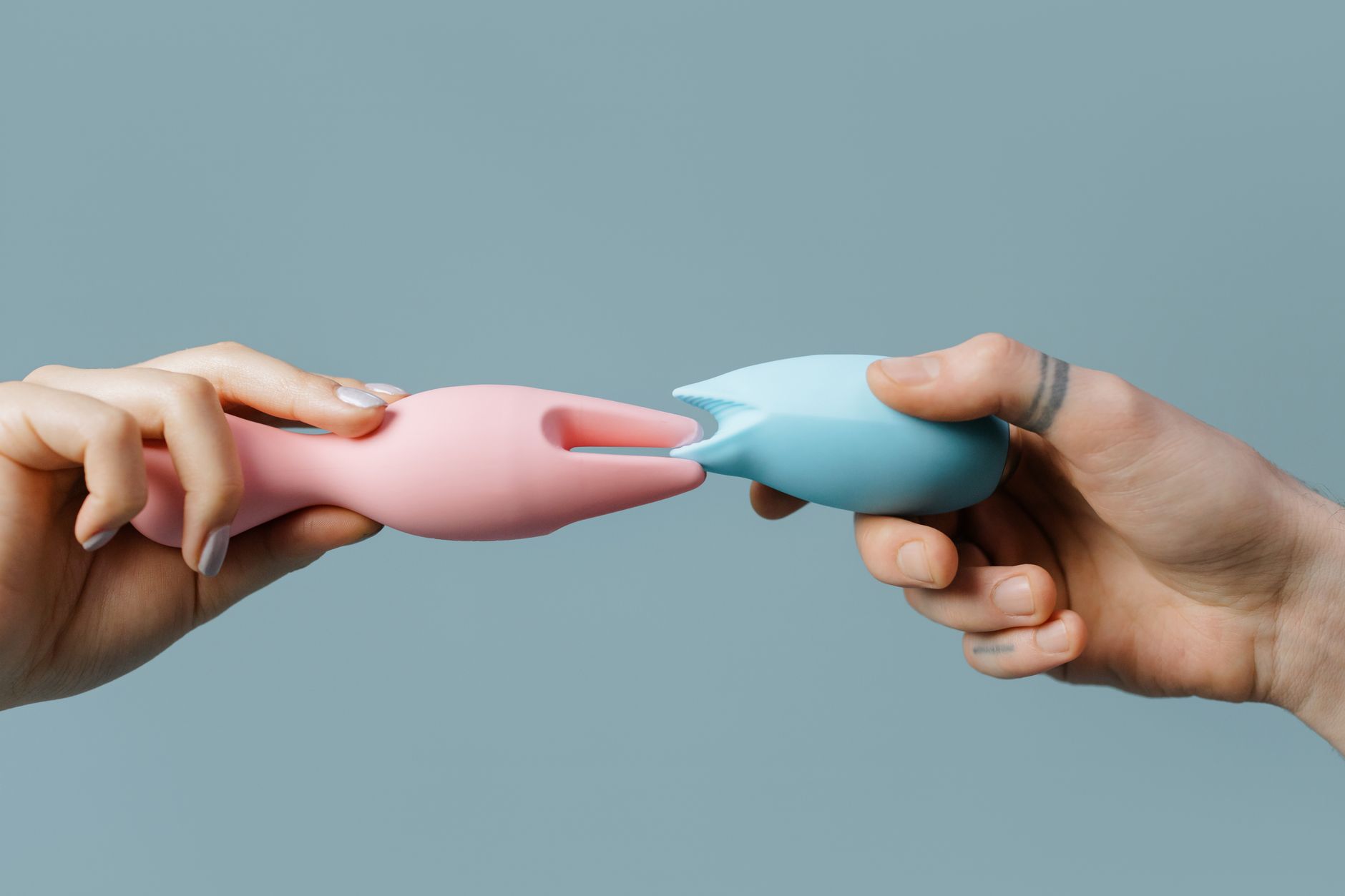
Lemon sexual toys work differently. Lemon vibrators use air-suction stimulation, which creates a pulse of negative pressure and release. Instead of vibrating at a frequency, suction builds and releases sensation in a way that feels more like a physical squeeze. For a flattened nervous system, that distinct pressure change is more noticeable than oscillation.
Think of it this way: if you're wearing headphones and someone's playing a steady beep, you might tune it out. But if they play a beep, a pause, a beep, a pause, you'll notice the rhythm. Lemon clitoral vibrators create rhythm through suction. Oscillation creates a constant tone.
That distinction matters when you're rebuilding sensation.
How to use lemon vibrators while on medication
Here are the strategies I recommend to clients navigating this shift:
Start with pattern recognition, not intensity. On a lem vibrator, begin at pattern one or two (usually the simplest rhythm) and spend 2-3 minutes just feeling the sensation without trying to orgasm. The goal is to reacquaint your nervous system with what pleasure feels like. Your brain needs to remember the pathway before it can follow it.
Budget more time. Medication-related sensation changes often mean arousal builds more slowly. Plan for 20-30 minutes instead of 10. This isn't a delay; it's a recalibration. And honestly, longer foreplay is not a downgrade.
Use lubrication, always. Some medications also reduce natural lubrication. Water-based lube isn't just comfort; it reduces friction resistance, which makes every sensation feel slightly sharper. That matters when sensation is already muted.
Alternate lemon vibrators with manual stimulation. The contrast is crucial. Switch between suction and your fingers or your partner's touch. The nervous system notices transitions. That noticing is how sensation comes back online.
Be patient with your body. I say this gently: rebuilding sensation after medication changes takes weeks, sometimes months. You're not failing. You're retraining. Some clients find that their orgasms eventually return to baseline. Others find they enjoy a different kind of pleasure than before. Both outcomes are valid.
When to talk to your prescriber
If sensation loss is affecting your quality of life significantly, tell your doctor. Not because you should stop taking your medication. But because options exist:
Your prescriber might lower the dose. They might switch you to a different SSRI or medication class with fewer sexual side effects. They might suggest adding a second medication that counteracts the sensation flattening. They might recommend dosing your current medication differently (taking it at night instead of morning, for example).
None of these conversations are easy. But they're important. Your mental health and your pleasure both matter. A good prescriber will work with you on both.
The role of your partner (if you have one)
If you're partnered, this transition is a conversation, not a problem to solve alone. Let them know what's happening: "My medication affects how I feel sensation. It's not about us. But I need to rebuild this differently."
That sounds like: trying lemon vibrators together, spending more time on foreplay than before, sometimes using stimulation as a warm-up rather than the main event, being okay with sessions that feel different than they used to.
Many couples find that this shift actually deepens connection. You're not performing. You're exploring together. You're both learning what this version of your body needs.
The timeline for sensation recovery
Every nervous system is different. Some people regain full sensation within 4-6 weeks of adjusting to medication. Others take 3-4 months. A few find their pleasure response permanently shifts, but not necessarily in a bad way.
What I've noticed consistently: people who actively engage with sensation rebuilding (through exploration, communication, and yes, tools like lemon vibrators) recover faster than those who avoid the topic. Your nervous system needs practice to rewire. You're not "fixing" yourself. You're retraining.
Honestly though: if you've been on medication for 6 months and sensation hasn't budged at all, that's not a wait-and-see situation anymore. That's a prescriber conversation.
What you deserve to know
Medication that saves your mental health isn't a sacrifice you make on the altar of pleasure. It's not a trade-off. It's a recalibration. And your body knows how to find its way back. You just need the right tools and the right information.
Lemon vibrators like those from Lems Sex Toy were literally designed for bodies like yours. For sensation that needs a different kind of amplification. For pleasure that's being rebuilt.
You're not broken. Your medication isn't the enemy. You're just learning what works now.
People also ask
How long does it take for sensation to come back after starting antidepressants?
Sensation flattening usually appears within the first 2-4 weeks of starting an SSRI, but recovery timelines vary wildly. Some people regain full sensation within 4-8 weeks. Others take 3-6 months. A small percentage find that their pleasure response stays different, though not necessarily worse. If you've waited 6 months with no improvement, talking to your prescriber about adjustments is worth it.
Can I use lemon vibrators if I'm on medication?
Absolutely. In fact, lemon clitoral vibrators work particularly well for medication-induced sensation changes because suction stimulation creates a different kind of nerve activation than traditional vibration. You're not contraindicating anything. You're working with your recalibrated nervous system.
Will switching medications help?
Maybe. Some SSRIs have lower sexual side effect profiles than others. Bupropion, for example, often has minimal impact on sensation. But switching medications is a medical decision, not something to do because of pleasure concerns alone. It's worth raising in a prescriber appointment. Some doctors will work with you to find a balance.
Is sensation flattening on medication permanent?
Not usually. But "usually" isn't a guarantee. Most people find that sensation returns or significantly improves over time, especially if they're actively engaging with rebuilding pleasure. Some find a new baseline that feels different but still good. And a small percentage do experience longer-term changes. That doesn't mean pleasure is gone. It means it's different.
Should I tell my partner about medication affecting my sensation?
Yes. This conversation is foundational. You're not confessing a failure. You're naming a real physiological shift so you can adapt together. Partners who know what's happening can be part of the solution. Partners guessing often get it wrong, which creates more frustration.
Are lemon vibrators better than wands or bullets for medication-related sensation loss?
For medication-flattened sensation, lemon suction vibrators typically work better because suction creates a distinct pressure pulse that cuts through raised sensation thresholds more effectively than steady vibration. But everyone's nervous system responds differently. If you've been using wands or bullets without success, a lem vibrator is worth trying. If something else works for you, that's equally valid.
Your body has changed. Your tools might need to change too. That's not a step backward. That's adaptation.