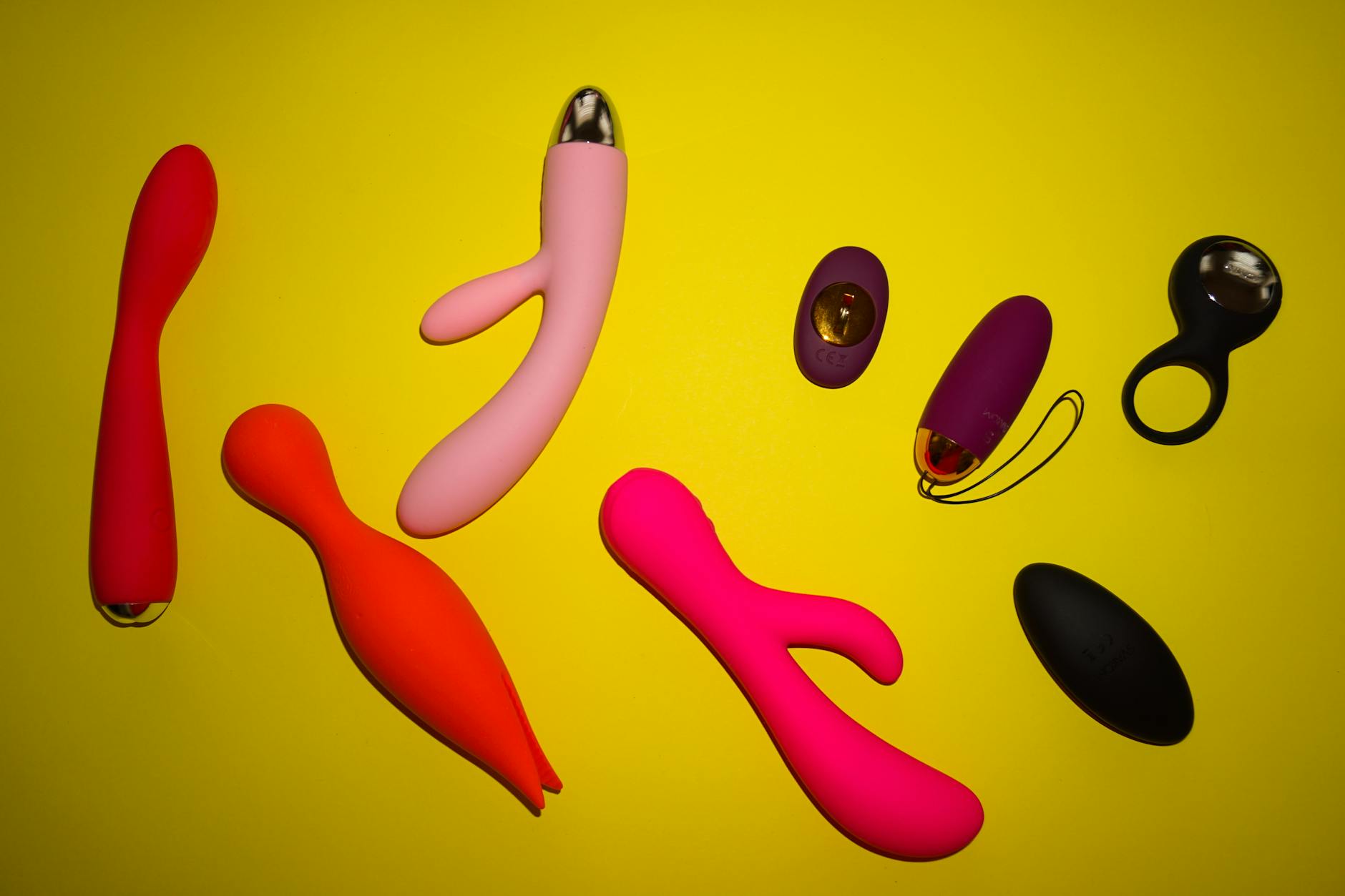
The thing nobody tells you about antidepressants and sex
Antidepressants work by changing how your brain processes serotonin. That's the whole point. But serotonin doesn't just regulate mood. It also regulates arousal, orgasm intensity, and the speed at which your nervous system ramps up during sex. So when SSRIs or SNRIs flatten your depression, they sometimes also flatten your ability to feel pleasure. And nobody volunteers that information during the prescribing conversation.
Here's what I need you to know: this is real, it's common, and it's not a sign that you should quit your medication or that pleasure is permanently gone. It's a side effect with solutions.
What antidepressants actually do to arousal
Three things happen physiologically when you start an SSRI or SNRI:
First, arousal takes longer to build. Your brain is receiving less serotonin reuptake feedback, which means the accelerator pedal for sexual excitement is softer. Where you used to get turned on in 5 minutes, now it takes 20. That's not laziness. That's neurobiology.
Second, sensation feels muted. Your nervous system is literally processing stimulation differently. Touch doesn't register as intensely. Pleasure signals move slower from your body to your brain. It's like watching a movie with the volume turned down a few notches.
Third, orgasms (if they happen at all) feel flatter or take forever. Some people describe it as chasing a distant finish line. Others say they reach a plateau and can't push over the edge. Some experience complete anorgasmia. All three are documented side effects affecting roughly 25 to 40 percent of people on SSRIs.
The good news? Your body didn't break. Your nervous system just needs different input to get the same result.
Why lemon clitoral vibrators work better for this specific problem
Here's where lemon sexual toys come in. Unlike traditional wand vibrators or other toys that rely on oscillation and friction, lemon suction vibrators work through a completely different mechanism. They create rhythmic suction and release patterns that stimulate nerve endings without requiring the kind of direct pressure or speed that takes forever to register through a medication-dulled nervous system.
The difference matters. A traditional vibrator sends repetitive buzz signals to your nerves. Your medicated brain has to collect a lot of those signals before pleasure registers. A lemon clitoral vibrator sends distinct pressure pulses. It's easier for a dulled nervous system to recognize and respond to a clear pattern versus constant buzz noise.
Plus, lemon vibrators like the Lem typically offer multiple intensity levels and suction patterns. You can start at a level that actually registers through the medication fog and gradually work up, rather than starting at a buzz frequency that feels like almost nothing.
Many people I work with report that switching from a traditional vibrator to a lemon suction toy is the difference between 40 minutes of trying and 10 minutes of actual pleasure. That's not coincidence. That's nervous system mechanics.
The first month after starting antidepressants is the hardest
If you're newly medicated, understand that the arousal flattening often peaks around week 3 to 6, then sometimes improves slightly as your body adjusts. You're not necessarily stuck here. But you also don't want to white-knuckle through six months of no pleasure waiting for adjustment that might not come.
That's the window where lemon clitoral vibrators become particularly useful. You're not trying to replicate the pleasure you used to feel. You're finding a new pathway to sensation while your brain recalibrates.
Start with pattern 1 or 2 on the Lem. Spend 15 to 20 minutes without a goal. Most people with medication-related pleasure loss try too hard. They turn up the intensity, they set a deadline, they get frustrated when orgasm doesn't arrive on schedule. Then they quit. Flipping that: lower intensity, no timeline, focus on any sensation at all. That's the reset that works.
When to talk to your doctor about switching medication
Some antidepressants cause more sexual side effects than others. If you're six months in, using a lemon vibrator regularly, and feeling absolutely no improvement in arousal or sensation, it's worth asking your prescriber about alternatives. Bupropion, for example, has fewer sexual side effects than SSRIs. Mirtazapine sometimes improves libido. Tricyclic antidepressants affect arousal differently.
But here's the critical part: don't stop taking what's working to experiment. Depression symptoms returning is worse than dealing with muted pleasure. What you can do is document your experience (mood stability, sexual response, any changes over weeks) and bring that conversation to your GP or psychiatrist with specifics. That data makes it easier for them to weigh whether a switch makes sense for you.
Some people also benefit from adding something. There's decent research on using low-dose sildenafil (the active ingredient in Viagra) to help with SSRI-related arousal and orgasm issues, particularly for people assigned female at birth. That's another conversation worth having.
The emotional layer underneath the physical one
Medication-related pleasure loss isn't just mechanical. There's usually a psychological component happening too. You're grieving the ease with which pleasure used to arrive. You might feel broken or defective. Your partner might be frustrated or take it personally. You start avoiding sexual situations because you know disappointment is waiting.
That psychological layer actually makes the physical problem harder to solve. Your body can't easily find pleasure when your brain is anxious about finding pleasure.
What I recommend: separate the conversations. One conversation is "I'm on medication that's affecting my arousal. Here are the practical things we're trying: better foreplay time, different toys, maybe a medication adjustment." That's a logistics conversation. The other conversation is "I'm feeling disconnected from my body and anxious about sex." That might need a therapist, or at minimum, direct time with your partner where you're not trying to have sex, just rebuilding comfort and communication.
When you treat the emotional piece alongside the physical piece, reconnection happens faster.
How to rebuild sensation without abandoning what helps your mental health
Here's a practical three-month framework:
Weeks 1-4: Solo exploration with a lemon vibrator, no pressure, no goal. You're learning what patterns register. Start with lower intensities. Spend 15-20 minutes. Notice what you feel, even if it's just awareness of touch.
Weeks 5-8: Extend foreplay time with a partner from 5-10 minutes to 20-30 minutes. No pressure on outcome. Introduce the lemon vibrator as part of foreplay, not as the last resort before giving up. Some people find that combining partner touch with toy stimulation helps bridge the gap.
Weeks 9-12: If sensation is returning, gradually experiment with different patterns and intensities. If it's plateaued, reassess with your doctor about medication adjustment or addition.
Throughout: keep the expectation realistic. You might not get back to pre-medication sensation for months. You might also find new pathways to pleasure that are different but equally satisfying. Both outcomes are fine. Progress isn't linear.
Common questions about antidepressants and pleasure
Will my pleasure come back if I stay on medication?
Sometimes yes, partially. Many people experience some improvement in sensation between months 3 and 6 as their nervous system adjusts. Others plateau and need either a medication switch or adaptive tools like lemon suction vibrators to maintain regular pleasure. Assume adaptation is possible but not guaranteed, and plan accordingly.
Is it better to just switch to a different antidepressant?
Not automatically. Switching carries risks: your mood might destabilize during the transition, and the new medication might have different side effects. Talk to your prescriber before making any changes. Sometimes a switch is the right call. Often, combining your current medication with tools and strategies is better than starting over.
Can I take something to get arousal back while staying on my antidepressant?
Yes, sometimes. Low-dose sildenafil, buspirone, and certain other medications have been studied for medication-induced sexual dysfunction. These require a prescription and a conversation with your doctor, but they're legitimate options worth exploring if pleasure loss is significantly affecting your quality of life.
Does everyone on antidepressants experience this?
No. Roughly 25 to 40 percent of people on SSRIs report arousal or orgasm changes. Others notice nothing. Genetics, individual nervous system sensitivity, the specific medication, dosage, and how long you've been taking it all matter. Just because your friend's on the same medication with no side effects doesn't mean you're broken.
Why do lemon vibrators work differently than regular vibrators?
Suction-based stimulation (like the Lem) creates distinct pressure patterns that are easier for a medicated nervous system to detect and respond to compared to constant oscillation. Plus, you can start at very low intensities and work up gradually, which is gentler than traditional vibrators that have a harder "entry point" in terms of felt sensation.
Is pleasure loss from antidepressants permanent?
No, but it can be long-term. Some people regain full sensation after months. Others adapt using tools and strategies and develop a new normal that's satisfying. A small percentage might need to explore medication changes with their doctor. The key: don't assume it's forever and don't suffer in silence.
What's next
If medication-related pleasure loss is happening for you, start here: get clear about what's actually changed (arousal speed, sensation intensity, orgasm ability?), pick one tool to experiment with (lemon clitoral vibrators are genuinely useful for this), and give it time. Three months minimum. If you're not seeing improvement by then, loop in your prescriber.
Your mental health matters. Your pleasure also matters. They don't have to be in competition.
Ready to explore this with more support? Reach out to us if you want to talk through what might work best for your situation. We're here for this conversation.