Let's start with what's actually happening to your skin
Your skin is thinner now. That's not a complaint. It's a fact. When estrogen drops—whether from menopause, hormonal medication changes, certain birth control methods, or even prolonged stress—the epidermis genuinely thins. Your collagen production slows. The natural oils that used to protect and cushion nerve endings become less abundant. Your clitoral tissue, which is already more sensitive than surrounding skin, becomes even more reactive.
This isn't weakness. It's a shift. And it changes everything about which toys actually feel good.
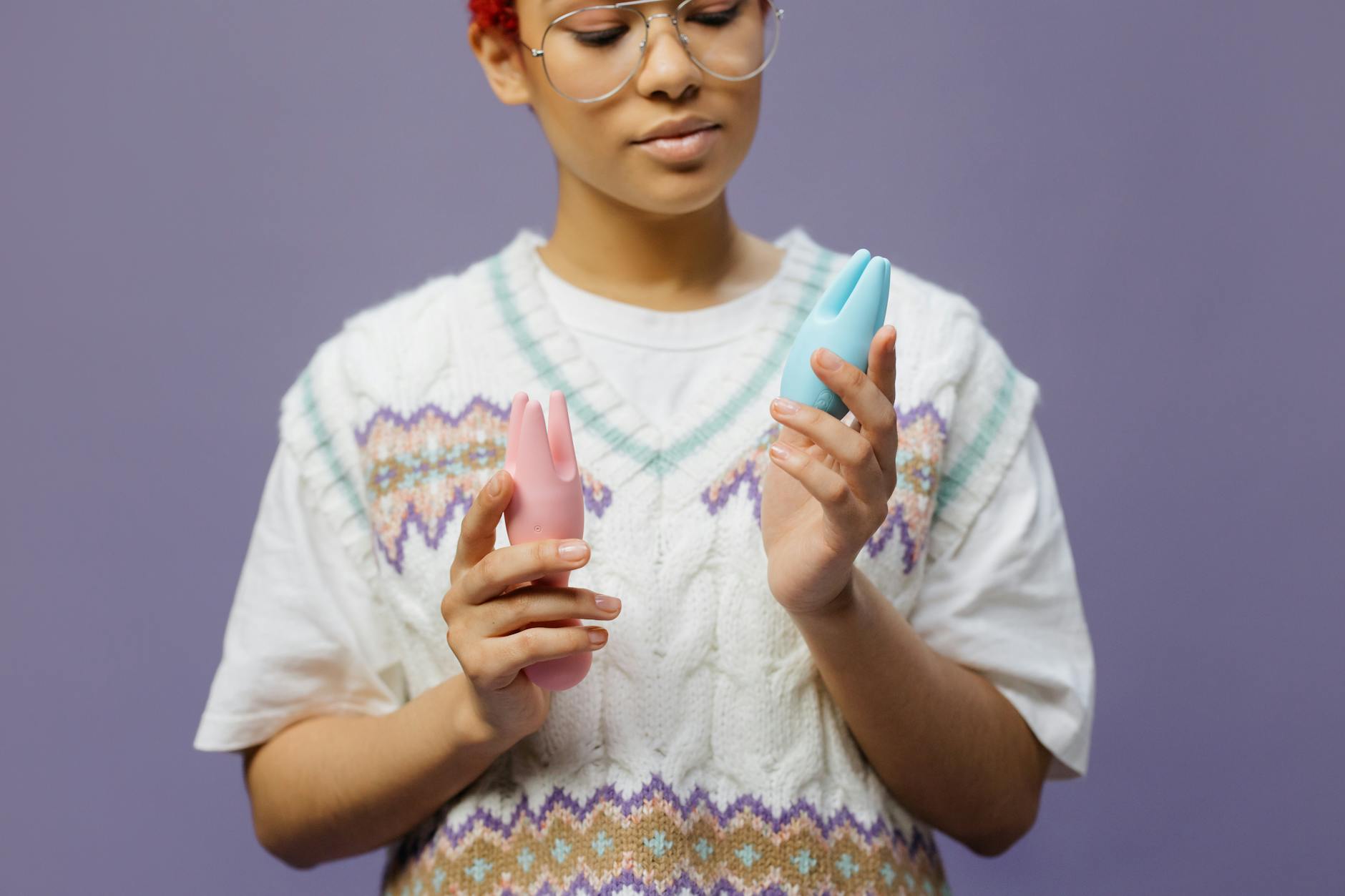
Photo by cottonbro studio on Pexels
Why traditional vibrators suddenly feel too intense
Most vibrators work through direct friction or rapid oscillation against tissue. That works fine when your epidermis is thicker and your nerve endings are cushioned. But when your skin thins, the same toy that felt perfect six months ago now feels almost harsh. Your nerve endings are closer to the surface, more exposed, more reactive. A bullet vibrator that used to build sensation gradually now feels like it's hitting raw nerves.
Some people describe it as feeling "too sharp." Others say the sensation is "scattered" instead of focused. What's actually happening is that your nervous system is receiving more direct stimulation with less tissue buffering the signal.
This is why so many people report that their go-to toy stops working after a hormonal shift. It's not that your capacity for pleasure has changed. It's that the delivery system no longer matches your skin's new reality.
The lemon vibrator difference: air pulse vs. vibration
Lemon clitoral vibrators use air pulse suction technology instead of traditional oscillation. Here's why that matters when your skin is sensitive.
Instead of a motor vibrating directly against tissue, air pulse creates gentle waves of suction around the clitoris. Think of it less like tapping and more like a soft rhythmic pulse. The stimulation is broader and gentler on the epidermis, but it still reaches the deeper nerve structures that create intense sensation.
With thinned skin, this distinction becomes enormous. Air pulse doesn't demand the same direct contact. It works with sensitivity rather than against it. The sensation actually deepens because you're not fighting discomfort. Your nervous system can focus on pleasure instead of managing intensity.
Many people with hormonally sensitive skin report that lemon vibrators feel like the first toy that's worked properly since their hormones shifted. Not weaker. Deeper. More sustained. Less numb.
The material factor: why silicone texture matters now
Lemon sex toys are made from premium silicone, which has a slightly softer texture than harder plastics or metal toys. When your skin is thinner and more reactive, that material softness genuinely reduces irritation.
Silicone also doesn't transfer temperature the way metal does. Cold toys can feel jarring on sensitive skin. Silicone warms to body temperature almost immediately, which means no shock to your nervous system when you first make contact.
The surface texture also matters. Smoother surfaces create less friction, which means less irritation potential. When you combine soft material, gentle air pulse stimulation, and smooth texture, you're essentially creating the opposite of what a bullet vibrator does. You're reducing peripheral irritation while maintaining deep nerve stimulation.
How to ease into lemon vibrators if your skin is newly sensitive
If you've never used an air pulse toy and your skin is reactive, start at the lowest setting. Seriously. Lemon vibrators have multiple intensity levels, and the lowest feels almost like a gentle massage compared to a traditional vibrator at its lowest setting.
Warm up longer than you think you need to. When estrogen drops, arousal takes longer to build. Your tissues need time to increase blood flow and natural lubrication. Budget 15 to 20 minutes of foreplay or external stimulation before you move to the toy itself. This isn't lost time. It's actually what makes the toy feel incredible.
Use water-based lubricant always. Thinner skin benefits dramatically from extra slip. Silicone lube can feel richer, but it can also degrade silicone toys over time. Water-based is safer for your toys and genuinely helps your skin feel less reactive.
Start externally. Don't jump straight to direct clitoral contact. Let the air pulse work on the vulva generally first. Let your nervous system acclimate to the sensation pattern. Then gradually narrow the focus to the clitoral area.
The psychological shift that happens too
Here's something that often gets overlooked: when you finally find a toy that works with your body instead of against it, your whole relationship to pleasure changes.
If you've spent months or years with toys that feel too intense, numb-inducing, or just off, you might have started assuming your capacity for sensation had diminished. That your hormonal shifts had actually broken something. When a lemon vibrator suddenly creates intense, sustained sensation without discomfort, the psychological relief is real.
You're not rebuilding pleasure. You're discovering that pleasure was always there. Your body just needed a tool designed for your current reality, not your past one.
Common patterns with hormonal sensitivity and lemon vibrators
I've noticed some clear patterns in how people with hormonally sensitive skin respond to lemon clitoral vibrators.
First: people often report that they can use them for longer sessions without numbness or irritation. This is the air pulse doing its job. The broader stimulation pattern doesn't exhaust nerve endings the way concentrated vibration does.
Second: orgasms often feel different. Not weaker. Usually more full-body and less concentrated in one spot. People describe them as "spreading" rather than "peaking." This is because air pulse engages a broader range of nerve tissue.
Third: many people find that sensitivity actually becomes an asset instead of a liability. Because the toy is gentler, you notice more nuance in sensation. You can feel the different intensity levels more clearly. You become more aware of your own arousal patterns.
When to talk to a doctor about skin sensitivity
If you're experiencing pain or significant irritation beyond normal sensitivity, get it checked. Genitourinary syndrome (GSM) involves not just thinned tissue but sometimes inflammation or infection. That's treatable, usually with topical estrogen creams that work quickly.
If your sensitivity is specifically around the clitoris and feels like raw nerve pain rather than just heightened sensation, that's also worth discussing with someone. Vulvodynia is real, and it's distinct from normal hormonal sensitivity. Treatment approaches are different.
Sensitivity itself is not a problem that needs fixing. But pain or progressive worsening is worth investigating.
Pairing lemon vibrators with other tools for sensitive skin
If you're rebuilding your pleasure toolkit after hormonal shifts, lemon clitoral vibrators often work better as part of a layered approach.
Wand vibrators with lower intensity settings can work alongside air pulse toys. External stimulation with your hands or a partner's hands still matters. Some people find that alternating between air pulse and manual stimulation creates the most satisfying experience.
The key is not assuming one tool has to do everything. Hormonally sensitive skin often responds better to variety and intentionality. Switching between stimulation types actually keeps your nervous system engaged instead of numbed out.
FAQ: Questions people actually ask about sensitivity and lemon vibrators
Do lemon vibrators work if you have always had sensitive skin, not just after hormonal changes?
Absolutely. The air pulse technology and soft silicone material benefit anyone with sensitive tissue, regardless of the cause. If you've always had reactive skin, lemon clitoral vibrators often feel more comfortable than traditional toys from your first use. The gentler stimulation pattern means less irritation and often more intense sensation paradoxically.
Can you use lemon vibrators during your period or when hormones are fluctuating?
Yes, though your sensitivity might change day to day during your cycle. Some people find that air pulse feels better during high-sensitivity days (right before your period) because it's less harsh than vibration. Others prefer it during lower sensitivity days because the gentleness means they can relax into sensation more easily. Pay attention to what your body is telling you on different days.
Do lemon vibrators numb you out like other vibrators sometimes do?
Not typically. Because air pulse works differently than vibration, numbing happens much less frequently. You might need longer sessions to build to orgasm initially, but that's arousal taking time. It's not numbness. If numbness does develop, it's usually a sign you need more lubrication or a longer break between sessions, not that the toy is too intense.
If you have vulvodynia or chronic pelvic pain, can you still use lemon vibrators?
That depends on your specific diagnosis and pain patterns. Some people with vulvodynia find that gentle air pulse stimulation actually helps with pain management over time. Others find that any genital stimulation is uncomfortable and toys aren't right for them currently. This is worth discussing with a pelvic health specialist or a healthcare provider familiar with vulvodynia. They can help you figure out what's safe for your body.
How does sensitivity change if you're on HRT or other hormonal medications?
It varies widely. Some people find that HRT stabilizes their sensitivity pretty quickly. Others find that sensitivity remains heightened even with hormone treatment. This is why lemon vibrators can be genuinely valuable even for people on HRT. You get a tool that works whether your hormones are stable or still shifting. The air pulse approach doesn't depend on a specific hormonal state to feel good.
Can you use lemon vibrators with other sensations like temperature play or bondage?
Yes. The silicone material is temperature-safe for warm (not hot) compresses or ice play. The shape and design work well in partnered scenarios. Just start with lower intensity if you're combining sensations. Adding complexity sometimes means reducing base intensity, and that's fine. You're learning what your body responds to now, which is different from what it responded to before hormonal changes.
The bigger picture: sensitivity as information, not limitation
When your skin becomes more sensitive after hormonal changes, the temptation is to see it as a loss. You can't use your favorite toy anymore. Sensations feel overwhelming. You have to slow down.
Here's what I've learned from working with hundreds of people navigating this shift: sensitivity is actually information. Your body is telling you that it needs different conditions now. Softer touch. Longer warm-up. More intentionality.
Lemon clitoral vibrators aren't a workaround for sensitivity. They're an alignment. They're a tool designed for the body you have right now, not the body you used to have. That's not compromise. That's wisdom.
Your pleasure hasn't diminished. It's evolved. And when you find a toy that honors that evolution, the sensation is often deeper and more sustained than anything you experienced before.
If you're navigating hormonal changes and finding that your usual tools don't work anymore, that's not a dead end. It's an opportunity to discover what truly works for your body now. That discovery process is where the real pleasure lives.
Sources
Hartmann, K. E., et al. (2018). "Vulvodynia: A Systematic Review." Obstetrical & Gynecological Survey, 73(3), 193-213.
Ackerman, R., et al. (2016). "The Impact of Estrogen on Vulvovaginal Tissue and the Effect on Sexual Function." Sexual Medicine Reviews, 4(1), 59-65.
Davis, S. N. (2019). "Menopausal Hormone Therapy and Skin Aging." Climacteric, 22(6), 549-555.